Chain interoperability is the technology that lets these worlds finally communicate, trade, and collaborate. With bridges in place, a stablecoin from one networkChain interoperability is the technology that lets these worlds finally communicate, trade, and collaborate. With bridges in place, a stablecoin from one network

Educational Byte: What Is Chain Interoperability (or How Your Tokens Connect)?

Before getting too deep into the tech talk, let’s picture the Internet without hyperlinks. Every website would live alone on its own little island, never connected to the rest. That’s how most crypto networks started: isolated, self-contained worlds with their own tokens, rules, and communities. Chain interoperability is the technology that lets these worlds finally communicate, trade, and collaborate. It’s what turns a scattered map of islands into an archipelago with real connections between them.

Without chain interoperability, each network is stuck in its lane. You can’t send tokens across different networks without a helping mechanism in the middle. These “bridges” make such moves possible by allowing value and data to cross from one network to another. This concept matters because it opens the door to smoother user experiences, wider access to decentralized finance (DeFi), and the kind of collaboration needed for crypto to grow beyond silos.

This kind of connectivity also creates more opportunities. With bridges in place, a stablecoin from one network can be used in lending pools on another, and NFTs can travel between marketplaces. Liquidity flows more easily, and developers can combine tools from multiple ecosystems to create better, faster services for everyone. It’s the same logic that made the early Internet thrive once websites began linking together. \n

How Crypto Networks Connect

The most common bridge types fall into three categories. In the Lock and Mint model, users lock tokens on one chain, and a corresponding version is created on another. If you burn the minted ones later, your originals are released back. Burn and Mint works similarly, except tokens are destroyed on the source chain and reissued elsewhere. The Lock and Unlock model relies on liquidity pools, where funds are locked on one side and unlocked from reserves on the other.

Each type aims to balance usability with safety, but all must prove what happened on chain A before chain B can act. Besides, it’s important to consider that all these are mostly background processes, and final users only get to see buttons like ‘Send’ or ‘Exchange’ in their wallets.

On the other hand, not all bridges operate the same way in terms of trust. Some are trust-based, where users rely on a company or federation to hold funds safely. Others are trustless, using smart contracts or agents to remove middlemen. The first type may be quicker but can expose users to custodial risks, while the second offers more independence but relies on code security.

Meanwhile, large ecosystems like Polkadot and Cosmos went one step further. They were built from scratch for chain interoperability through relays or inter-blockchain communication. These systems show how seamless cross-chain communication can be when designed from the ground up, rather than added later. \n

Chain Interoperability in Obyte

Obyte’s Counterstake Bridge takes the interoperability idea and makes it decentralized from the ground up. It connects Obyte with EVM-compatible networks like Ethereum, BNB Smart Chain, and Polygon, letting users move assets between them safely. Now, instead of trusting a single custodian, Counterstake uses a clever “economic incentive” model where users stake value to prove that a transfer is legitimate.

If someone tries to cheat, others can counter-stake against that claim, with rewards going to the honest participants. Transfers usually complete after a 3-day waiting period, but users can also work with “assistants” instead of staking. They handle the claim on their behalf for a small reward, in a shorter time. The whole process runs through a simple interface where users select what to send, where to receive it, and see the assistant’s fee and limits upfront. It’s a mix of decentralization and convenience, designed for anyone comfortable using a crypto wallet.

Governance in Counterstake is fully community-driven. Token holders on both sides of a transfer can vote on how the protocol behaves, from stake amounts to challenge timing. It’s a living system that adjusts to its users. Beyond the bridge, Obyte’s infrastructure also supports temporary data storage and fee-burning features, which could allow sidechains to verify data and manage transactions without separate consensus layers.

As we can see, interoperability isn’t just a nice addition. It’s what allows crypto to grow from isolated platforms into a true, connected economy. As bridges like Counterstake mature and more networks open up to collaboration, users gain smoother access, developers find new creative space, and the ecosystem as a whole moves closer to the borderless ideal it was built for.


:::info Featured Vector Image by rawpixel / Freepik

:::

\n

\

Piyasa Fırsatı
Polytrade Logosu
Polytrade Fiyatı(TRADE)
$0,07299
$0,07299$0,07299
+%6,38
USD
Polytrade (TRADE) Canlı Fiyat Grafiği
Sorumluluk Reddi: Bu sitede yeniden yayınlanan makaleler, halka açık platformlardan alınmıştır ve yalnızca bilgilendirme amaçlıdır. MEXC'nin görüşlerini yansıtmayabilir. Tüm hakları telif sahiplerine aittir. Herhangi bir içeriğin üçüncü taraf haklarını ihlal ettiğini düşünüyorsanız, kaldırılması için lütfen [email protected] ile iletişime geçin. MEXC, içeriğin doğruluğu, eksiksizliği veya güncelliği konusunda hiçbir garanti vermez ve sağlanan bilgilere dayalı olarak alınan herhangi bir eylemden sorumlu değildir. İçerik, finansal, yasal veya diğer profesyonel tavsiye niteliğinde değildir ve MEXC tarafından bir tavsiye veya onay olarak değerlendirilmemelidir.

Ayrıca Şunları da Beğenebilirsiniz

Is Putnam Global Technology A (PGTAX) a strong mutual fund pick right now?
Is Putnam Global Technology A (PGTAX) a strong mutual fund pick right now?

The post Is Putnam Global Technology A (PGTAX) a strong mutual fund pick right now? appeared on BitcoinEthereumNews.com. On the lookout for a Sector – Tech fund? Starting with Putnam Global Technology A (PGTAX – Free Report) should not be a possibility at this time. PGTAX possesses a Zacks Mutual Fund Rank of 4 (Sell), which is based on various forecasting factors like size, cost, and past performance. Objective We note that PGTAX is a Sector – Tech option, and this area is loaded with many options. Found in a wide number of industries such as semiconductors, software, internet, and networking, tech companies are everywhere. Thus, Sector – Tech mutual funds that invest in technology let investors own a stake in a notoriously volatile sector, but with a much more diversified approach. History of fund/manager Putnam Funds is based in Canton, MA, and is the manager of PGTAX. The Putnam Global Technology A made its debut in January of 2009 and PGTAX has managed to accumulate roughly $650.01 million in assets, as of the most recently available information. The fund is currently managed by Di Yao who has been in charge of the fund since December of 2012. Performance Obviously, what investors are looking for in these funds is strong performance relative to their peers. PGTAX has a 5-year annualized total return of 14.46%, and is in the middle third among its category peers. But if you are looking for a shorter time frame, it is also worth looking at its 3-year annualized total return of 27.02%, which places it in the middle third during this time-frame. It is important to note that the product’s returns may not reflect all its expenses. Any fees not reflected would lower the returns. Total returns do not reflect the fund’s [%] sale charge. If sales charges were included, total returns would have been lower. When looking at a fund’s performance, it…
Paylaş
BitcoinEthereumNews2025/09/18 04:05
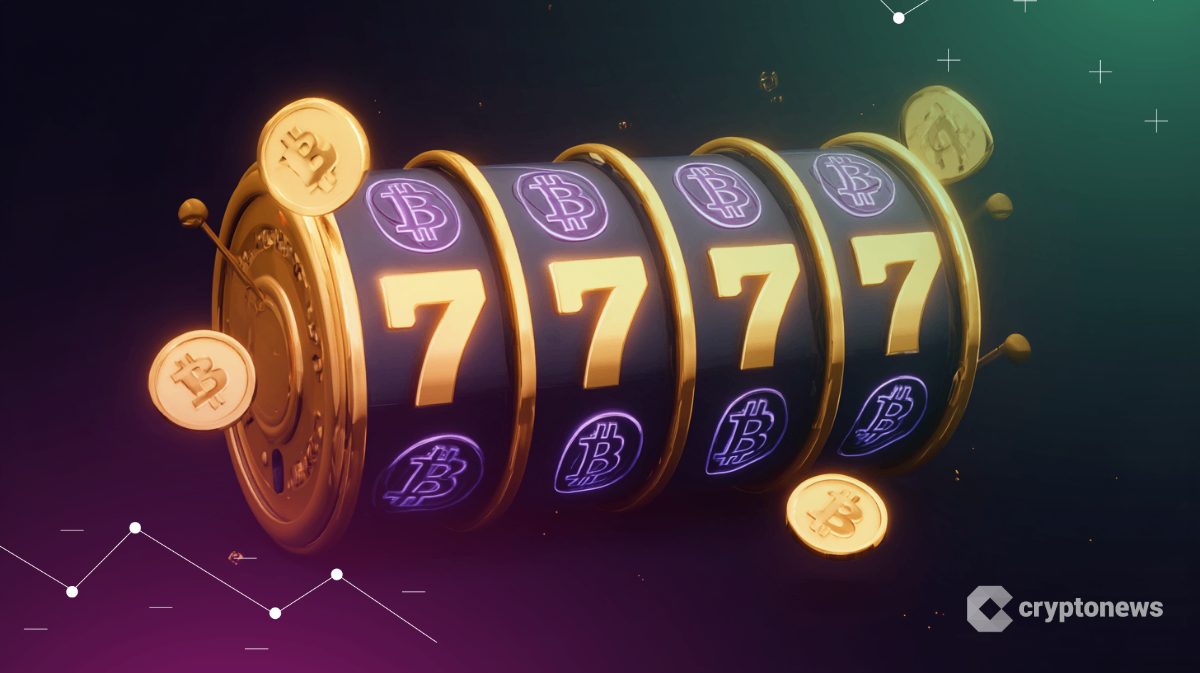
Crypto Casino Luck.io Pays Influencers Up to $500K Monthly – But Why?

Crypto Casino Luck.io Pays Influencers Up to $500K Monthly – But Why?

Crypto casino Luck.io is reportedly paying influencers six figures a month to promote its services, a June 18 X post from popular crypto trader Jordan Fish, aka Cobie, shows. Crypto Influencers Reportedly Earning Six Figures Monthly According to a screenshot of messages between Cobie and an unidentified source embedded in the Wednesday post, the anonymous messenger confirmed that the crypto company pays influencers “around” $500,000 per month to promote the casino. They’re paying extremely well (6 fig per month) pic.twitter.com/AKRVKU9vp4 — Cobie (@cobie) June 18, 2025 However, not everyone was as convinced of the number’s accuracy. “That’s only for Faze Banks probably,” one user replied. “Other influencers are getting $20-40k per month. So, same as other online crypto casinos.” Cobie pushed back on the user’s claims by identifying the messenger as “a crypto person,” going on to state that he knew of “4 other crypto people” earning “above 200k” from Luck.io. Drake’s Massive Stake.com Deal Cobie’s post comes amid growing speculation over celebrity and influencer collaborations with crypto casinos globally. Aubrey Graham, better known as Toronto-based rapper Drake, is reported to make nearly $100 million every year from his partnership with cryptocurrency casino Stake.com. As part of his deal with the Curaçao-based digital casino, the “Nokia” rapper occasionally hosts live-stream gambling sessions for his more than 140 million Instagram followers. Founded by entrepreneurs Ed Craven and Bijan Therani in 2017, the organization allegedly raked in $2.6 billion in 2022. Stake.com has even solidified key partnerships with Alfa Romeo’s F1 team and Liverpool-based Everton Football Club. However, concerns remain over crypto casinos’ legality as a whole , given their massive accessibility and reach online. Earlier this year, Stake was slapped with litigation out of Illinois for supposedly running an illegal online casino stateside while causing “severe harm to vulnerable populations.” “Stake floods social media platforms with slick ads, influencer videos, and flashy visuals, making its games seem safe, fun, and harmless,” the lawsuit claims. “By masking its real-money gambling platform as just another “social casino,” Stake creates exactly the kind of dangerous environment that Illinois gambling laws were designed to stop.”
Paylaş
CryptoNews2025/06/19 04:53
U.S. Banks Near Stablecoin Issuance Under FDIC Genius Act Plan

U.S. Banks Near Stablecoin Issuance Under FDIC Genius Act Plan

The post U.S. Banks Near Stablecoin Issuance Under FDIC Genius Act Plan appeared on BitcoinEthereumNews.com. U.S. banks could soon begin applying to issue payment
Paylaş
BitcoinEthereumNews2025/12/17 02:55