Two former Theta Labs executives have sued the company and CEO Mitch Liu, alleging fraud, market manipulation, and retaliation.Two former Theta Labs executives have sued the company and CEO Mitch Liu, alleging fraud, market manipulation, and retaliation.

Former Theta Labs executives allege fraud, market manipulation, retaliation in lawsuit

2025/12/17 21:50
3 min read

Theta Labs has been sued by two former senior executives, who are acting as whistleblowers, accusing the company, along with its chief executive, of fraud and market manipulation. 

All suits were filed separately in Los Angeles Superior Court by Jerry Kowal and Andrea Berry, who formerly held senior roles at the blockchain firm. 

The defendants are Theta Labs, its parent company, Sliver VR Technologies, and Mitch Liu, the company’s chief executive officer.

The whistleblowers have cited a longstanding pattern of lies, insider self-dealing, and retaliation against employees who reported wrongdoing that was exposed during the four months of the scandal. Representatives of Theta Labs and Liu were not immediately available to comment on the lawsuit.

Theta Labs is a Delaware-based blockchain company that owns and operates the Theta Network, a decentralized platform specifically designed to deliver, compute, and store media. The company also facilitates Theta EdgeCloud, a hybrid cloud product. 

The network is built on two major crypto tokens: THETA, which supports governance and staking, and TFUEL, which provides transactional and network services.

Former executives accuse CEO of pump-and-dump schemes

The lawsuits outline a sustained pattern of insider trading related to Theta’s crypto tokens and NFT marketplace, the plaintiffs claim.

Liu’s personal trading operation, known as Theta Labs, was described as involving fraud, self-dealing, and market manipulation, affecting both investors and employees, according to Kowal’s complaint. Liu executed multiple pump-and-dump schemes that artificially increased token prices until insider sell-offs wiped out value, the filing said.

The lawsuits also accuse Theta of manipulation inside the company’s NFT operations. The cases continue, and no court has decided on the allegations. 

They allege that fraudulent bids were created to inflate prices on NFTs associated with major celebrity projects. Some of these offerings were tied to collaborations with prominent figures, including pop stars, the complaint said.

Berry’s lawsuit stated that, as a staff member at Theta Labs, she was aware of and reported extensive misconduct by top executives and employees. Her complaint alleges that the moves were all part of an effort to inflate the price of the THETA token and to benefit Liu personally. She also says she faced retribution for raising internal issues.

Former executives dispute Theta’s claims of high-profile partnerships

Much of Berry’s complaint centers on Theta’s public statements regarding strategic partnerships with major companies. Some of those partnerships, the lawsuit claims, were misleading and served to promote a false sense of external validation. 

A prime example is one related to Google. Theta said it would form a partnership with Google in May 2020, but Berry claims that it was restricted to a routine cloud services agreement. That scheme, the company said, led to the company paying approximately $7 million for Google Cloud products, making it a customer, rather than a strategic partner.

Under the lawsuit, it is alleged that this misled investors and the broader crypto community about the company’s credibility. Berry’s filing also accuses Theta of engaging in another type of self-dealing, claiming that some of its supposed partners were businesses created and wholly owned by Liu. 

Yet those relationships were marketed as independent collaborations under the CEO’s direct control, the lawsuit said.

Join a premium crypto trading community free for 30 days - normally $100/mo.

Disclaimer: The articles reposted on this site are sourced from public platforms and are provided for informational purposes only. They do not necessarily reflect the views of MEXC. All rights remain with the original authors. If you believe any content infringes on third-party rights, please contact [email protected] for removal. MEXC makes no guarantees regarding the accuracy, completeness, or timeliness of the content and is not responsible for any actions taken based on the information provided. The content does not constitute financial, legal, or other professional advice, nor should it be considered a recommendation or endorsement by MEXC.
Tags:

You May Also Like

Ex-Alipay UK Chief Eva Zhang to Lead Blockscout Into AI-Driven Growth

Ex-Alipay UK Chief Eva Zhang to Lead Blockscout Into AI-Driven Growth

Blockscout, the leading open-source block explorer for EVM chains, has appointed Eva Zhang, former CEO of Alipay UK, as its new chief executive officer.
Share
Blockchainreporter2025/09/18 19:00
Gold price in Malaysia: Rates on February 16
Gold price in Malaysia: Rates on February 16

The post Gold price in Malaysia: Rates on February 16 appeared on BitcoinEthereumNews.com. Gold prices fell in Malaysia on Monday, according to data compiled by
Share
BitcoinEthereumNews2026/02/16 13:21
U.S. Treasury Seeks Public Input on Game-Changing Stablecoin Regulations

U.S. Treasury Seeks Public Input on Game-Changing Stablecoin Regulations

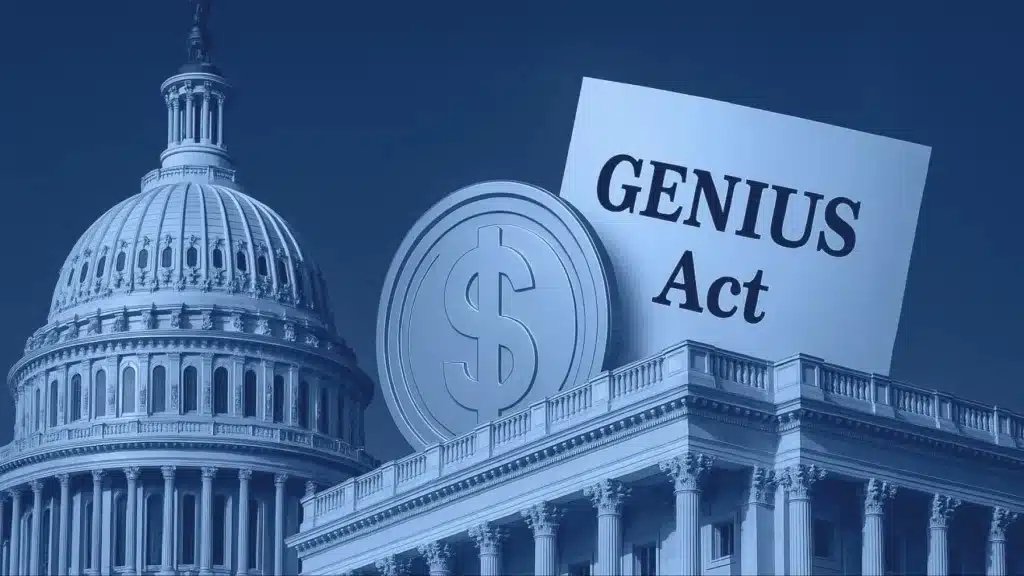
U.S. Treasury invites feedback on groundbreaking stablecoin regulations under GENIUS. Key questions around stablecoin tax treatment and foreign issuer rules. Treasury explores marketing restrictions, oversight balance, and AML enforcement options. The U.S. Treasury Department is now inviting public feedback on the implementation of the groundbreaking GENIUS Act, the first piece of crypto-specific legislation passed in the U.S. this summer. The new law is a milestone in terms of regulation of stablecoins, as the Treasury is aiming to balance the need to innovate and the aim of protecting consumers and monetary stability. According to Treasury officials, the GENIUS Act is designed to stimulate the growth of payment stablecoins while addressing potential risks related to illicit financial activities and maintaining overall economic stability. The department especially shows interest in the acquisition of data that could assist in refining the regulatory guidelines as it proceeds with the writing of its formal proposal. The commenting is active through the October 20 deadline, which gives both opponents and players in the industry time to express their views. One of the most pressing questions under consideration is how the IRS will handle the federal income tax treatment of stablecoins. The GENIUS Act does not directly cover this, and there is room to interpret and make decisions by regulation in the future. Also unclear is when and how foreign issuers can be allowed to offer stablecoins in the U.S., and it does not look like there is a timeline involved in making any changes. Also Read: Ripple Partners with DZ BANK to Launch Institutional Digital Asset Custody Solution Key Areas Under Scrutiny as Treasury Prepares Stablecoin Regulations Several key issues are currently up for discussion as part of the Treasury’s review of the GENIUS Act’s implementation. These include whether stablecoins should have certain marketing limitations, whether it should be at the state or federal level, and how the current anti-money laundering (AML) and sanctions policies will relate to digital assets. Moreover, the Treasury is analyzing how the current regulations, such as the Bank Secrecy Act (BSA), are capable of mitigating the risks of digital assets. This is after it was earlier sought to seek the views of people on the detection of illicit use in the digital asset markets. As the Treasury moves toward finalizing the regulations, it is clear that the department aims to craft a robust and flexible framework that can adapt to the evolving landscape of digital currencies. The outcome will have lasting implications for the future of stablecoin regulation in the U.S., shaping the path forward for both domestic and international players in the crypto space. Also Read: Shiba Inu Faces Major Selling Pressure as 157 Billion SHIB Floods Exchanges! The post U.S. Treasury Seeks Public Input on Game-Changing Stablecoin Regulations appeared first on 36Crypto.
Share
Coinstats2025/09/20 17:22