Finance Share Share this article Copy linkX (Twitter)LinkedInFacebookEmail Most Influential: Carlos Domingo The Secur Finance Share Share this article Copy linkX (Twitter)LinkedInFacebookEmail Most Influential: Carlos Domingo The Secur

Most Influential: Carlos Domingo

2025/12/17 23:00
8 min read
Share
Share this article
Copy linkX (Twitter)LinkedInFacebookEmail

Most Influential: Carlos Domingo

The Securitize CEO ground through the uncool years of tokenization while NFTs, FTX and memecoins soaked up the hype. With billions in tokenized assets, a SPAC listing in the works and BlackRock as a flagship client and backer, Carlos Domingo’s early bet is finally paying off.

By Krisztian Sandor|Edited by Cheyenne Ligon
Updated Dec 17, 2025, 3:07 p.m. Published Dec 17, 2025, 3:00 p.m.

Eight years after co-founding Securitize in 2017, Carlos Domingo is steering what has quietly become one of the core infrastructure players of the tokenized asset trade.

This feature is a part of CoinDesk's Most Influential 2025 list.

STORY CONTINUES BELOW
Don't miss another story.Subscribe to the Crypto Daybook Americas Newsletter today. See all newsletters
Sign me up

The firm says it has about $3.6 billion in tokenized real-world assets (RWAs) outstanding as of late November and expects to finish the year above $4 billion in assets under management. Securitize is profitable — revenue has grown roughly 10x over the past 18 months — and the firm is preparing to go public via a SPAC merger with Cantor Fitzgerald’s vehicle, with a listing targeted for early next year.

“This has been the best year in the company's history, by far,” Domingo said in an interview with CoinDesk. “It’s been the inflection point we’d been waiting for.”

Doing tokenization before it was cool

If tokenization is one of crypto’s big narratives now, Domingo is quick to point out that Securitize was there when it decidedly wasn’t.

“In 2021 I would talk to investors and they’d say, ‘Why would we invest in tokenization? Look at FTX, Celsius, BlockFi, they’re growing so fast,’” he said. “I’d say, ‘Sure, but are you sure those guys will be around tomorrow?’ There were a lot of red flags. Still, we were not the cool kids on the block.”

It was a challenging path. Securitize had to raise fresh funding roughly every 18 months, with modest rounds compared to the mega-raises going to unregulated trading platforms.

Hiring talent was harder, too. “We couldn’t give people big token packages. We couldn’t pay the highest salaries,” Domingo said.

What kept him going was conviction and a bit of survivalist philosophy.

“One of our board members, Brad Stephens from Blockchain Capital, told me: you need to be like a cockroach,” Domingo said. “Digitization of any industry is unavoidable, the only thing you don’t know is when. So you need to make sure you don’t die before it happens.”

He’s blunt about what happened to early tokenization rivals. “If you look at the companies that looked like they were going to dominate, most disappeared, ran out of money or sold on bad terms,” he said. “Being early is a problem if you don’t survive.”

Carlos Domingo will be speaking at CoinDesk's upcoming Consensus Hong Kong in February and Consensus 2026 in Miami in May.

From tech vendor to one-stop shop

When Securitize launched, Domingo thought he was building a software company.

“The original idea was to sell a tokenization platform as technology,” he recalled. Banks, asset managers and other issuers would license the stack, tokenize their assets and handle everything themselves. Securitize would just ship code.

It took less than a year for reality to bite. “In 2018 it became very clear we needed to pivot from being a technology provider to being a service provider,” he said. “The people that have financial assets are not technology companies. They expect somebody to provide service to them – that’s what BNY, State Street or SS&C do.”

That led Securitize to pursue licenses and roles that live deep in the plumbing of traditional finance. The firm became a registered transfer agent in the U.S., then added a broker-dealer, an alternative trading system (ATS), an investment adviser and fund administration capabilities. The transformation culminated with the acquisition of MG Stover’s unit, turning Securitize into the largest digital-asset fund administrator.

Today, instead of selling a tokenization toolkit, Domingo pitches a one-stop shop to bring assets onchain.

“We go to an asset manager and say: we’ll form the fund, we’ll put your securities onchain, we’ll integrate with the blockchains and DeFi, we’ll do distribution, fund admin, everything,” he said. “You do what you do well — manage assets. We do everything else.”

He traces that strategy back to a dog-eared copy of “Crossing the Chasm,” Geoffrey Moore’s classic on commercializing new technologies. The core idea: early adopters are happy to stitch together multiple vendors; the mainstream market is not.

“To cross the chasm, you have to offer the whole product,” Domingo said. “People are not going to piecemeal build things by putting together five different providers."

BlackRock, Binance and the collateral phase

The company has now moved far beyond survival, lining up a powerful roster of backers including BlackRock, Jump Crypto and Cathie Wood's ARK Invest. Securitize helped bring BlackRock’s tokenized fund to market last year and has since expanded it across multiple blockchains, including Solana and BNB Chain. It’s currently the largest tokenized U.S. Treasury offering, with a roughly $2.5 billion market cap. It also lined up a powerful roster of backers Ark Invest, BlackRock and Jump Crypto.

Domingo said the important shift isn’t just about putting securities on a “better ledger,” but, instead, what happens after that. The use case he emphasized is collateral.

“We’re very bullish on collateral,” he said. “You can take high-quality collateral like people use in TradFi, but move it at crypto speed, 24/7, with the quality of collateral institutions expect.”

Securitize has worked with venues like Binance, the world's largest crypto exchange by volume, on using tokenized RWAs as collateral in derivatives and other products. It's the kind of plumbing that doesn’t trend on social media, but it’s where Domingo sees tokenization starting to matter for the broader crypto market structure.

Heading for the public markets

The SPAC listing is both a milestone and a new kind of pressure.

“I’m very excited about finally going public. It’s going to be a defining moment for us,” he said. “It’s also scary. I’ve never been CEO of a publicly traded company.”

While Securitize’s year may look like an overnight success, from Domingo’s point of view, it’s the delayed payoff for being early and refusing to leave.

“Now it’s not about whether the industry is happening or not,” he said. “It’s about how much market share we can capture and retain. We’ve been talking about this for eight years. Finally, everybody else is talking about it too.”

Real World Assets TokenizationCarlos DomingoCoinDesk Most Influential 2025

More For You

Protocol Research: GoPlus Security

Commissioned byGoPlus

What to know:

  • As of October 2025, GoPlus has generated $4.7M in total revenue across its product lines. The GoPlus App is the primary revenue driver, contributing $2.5M (approx. 53%), followed by the SafeToken Protocol at $1.7M.
  • GoPlus Intelligence's Token Security API averaged 717 million monthly calls year-to-date in 2025 , with a peak of nearly 1 billion calls in February 2025. Total blockchain-level requests, including transaction simulations, averaged an additional 350 million per month.
  • Since its January 2025 launch , the $GPS token has registered over $5B in total spot volume and $10B in derivatives volume in 2025. Monthly spot volume peaked in March 2025 at over $1.1B , while derivatives volume peaked the same month at over $4B.
View Full Report

More For You

Most Influential: Jeremy Allaire

Allaire spent 2025 pushing regulated digital dollars into the mainstream, shaping U.S. policy and unveiling Arc as the foundation for institutional blockchain finance.
Read full story
Latest Crypto News

Bitcoin shorts scramble for the exits as BTC climbs

Hut 8 and Coinbase outperform as Crypto stocks jump on bitcoin's sudden rally

Bitcoin re-takes $90,000 as price spikes early in U.S. session

Most Influential: Vlad Tenev

Most Influential: Paul Atkins

Most Influential: Caroline Pham

Top Stories

Bitcoin re-takes $90,000 as price spikes early in U.S. session

Bitcoin shorts scramble for the exits as BTC climbs

Don't call it QE — the Fed's $40 billion bill buys may not shake crypto out of slump

Hut 8 stock surges 20% on Fluidstack AI data center deal

Memecoin boom turns into capitulation one year after $150 billion market peak

Wall Street giant DTCC Picks privacy focused blockchain Canton Network for tokenization

Disclaimer: The articles reposted on this site are sourced from public platforms and are provided for informational purposes only. They do not necessarily reflect the views of MEXC. All rights remain with the original authors. If you believe any content infringes on third-party rights, please contact [email protected] for removal. MEXC makes no guarantees regarding the accuracy, completeness, or timeliness of the content and is not responsible for any actions taken based on the information provided. The content does not constitute financial, legal, or other professional advice, nor should it be considered a recommendation or endorsement by MEXC.

You May Also Like

Ex-Alipay UK Chief Eva Zhang to Lead Blockscout Into AI-Driven Growth

Ex-Alipay UK Chief Eva Zhang to Lead Blockscout Into AI-Driven Growth

Blockscout, the leading open-source block explorer for EVM chains, has appointed Eva Zhang, former CEO of Alipay UK, as its new chief executive officer.
Share
Blockchainreporter2025/09/18 19:00
Gold price in Malaysia: Rates on February 16

Gold price in Malaysia: Rates on February 16

The post Gold price in Malaysia: Rates on February 16 appeared on BitcoinEthereumNews.com. Gold prices fell in Malaysia on Monday, according to data compiled by
Share
BitcoinEthereumNews2026/02/16 13:21
U.S. Treasury Seeks Public Input on Game-Changing Stablecoin Regulations

U.S. Treasury Seeks Public Input on Game-Changing Stablecoin Regulations

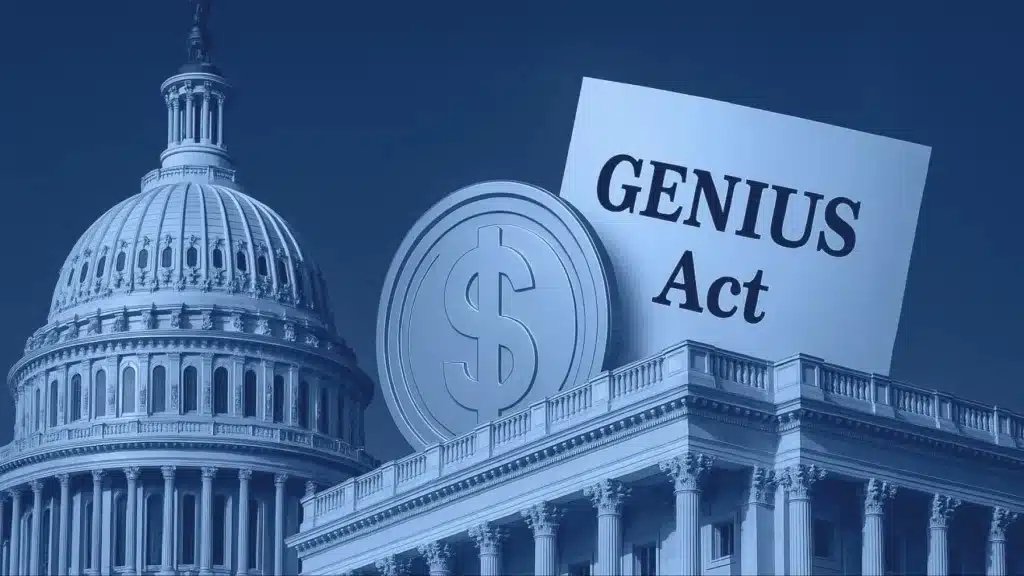
U.S. Treasury invites feedback on groundbreaking stablecoin regulations under GENIUS. Key questions around stablecoin tax treatment and foreign issuer rules. Treasury explores marketing restrictions, oversight balance, and AML enforcement options. The U.S. Treasury Department is now inviting public feedback on the implementation of the groundbreaking GENIUS Act, the first piece of crypto-specific legislation passed in the U.S. this summer. The new law is a milestone in terms of regulation of stablecoins, as the Treasury is aiming to balance the need to innovate and the aim of protecting consumers and monetary stability. According to Treasury officials, the GENIUS Act is designed to stimulate the growth of payment stablecoins while addressing potential risks related to illicit financial activities and maintaining overall economic stability. The department especially shows interest in the acquisition of data that could assist in refining the regulatory guidelines as it proceeds with the writing of its formal proposal. The commenting is active through the October 20 deadline, which gives both opponents and players in the industry time to express their views. One of the most pressing questions under consideration is how the IRS will handle the federal income tax treatment of stablecoins. The GENIUS Act does not directly cover this, and there is room to interpret and make decisions by regulation in the future. Also unclear is when and how foreign issuers can be allowed to offer stablecoins in the U.S., and it does not look like there is a timeline involved in making any changes. Also Read: Ripple Partners with DZ BANK to Launch Institutional Digital Asset Custody Solution Key Areas Under Scrutiny as Treasury Prepares Stablecoin Regulations Several key issues are currently up for discussion as part of the Treasury’s review of the GENIUS Act’s implementation. These include whether stablecoins should have certain marketing limitations, whether it should be at the state or federal level, and how the current anti-money laundering (AML) and sanctions policies will relate to digital assets. Moreover, the Treasury is analyzing how the current regulations, such as the Bank Secrecy Act (BSA), are capable of mitigating the risks of digital assets. This is after it was earlier sought to seek the views of people on the detection of illicit use in the digital asset markets. As the Treasury moves toward finalizing the regulations, it is clear that the department aims to craft a robust and flexible framework that can adapt to the evolving landscape of digital currencies. The outcome will have lasting implications for the future of stablecoin regulation in the U.S., shaping the path forward for both domestic and international players in the crypto space. Also Read: Shiba Inu Faces Major Selling Pressure as 157 Billion SHIB Floods Exchanges! The post U.S. Treasury Seeks Public Input on Game-Changing Stablecoin Regulations appeared first on 36Crypto.
Share
Coinstats2025/09/20 17:22