Nomura’s crypto subsidiary Laser Digital has launched a natively tokenised Bitcoin yield strategy aimed at institutional and eligible accredited investors seekingNomura’s crypto subsidiary Laser Digital has launched a natively tokenised Bitcoin yield strategy aimed at institutional and eligible accredited investors seeking

Nomura-Backed Laser Digital Launches Tokenised Bitcoin Yield Fund Targeting Excess Returns

2026/01/22 17:45
3 min read

Nomura’s crypto subsidiary Laser Digital has launched a natively tokenised Bitcoin yield strategy aimed at institutional and eligible accredited investors seeking income on top of long-only BTC exposure.

In a press release shared with CryptoNews, the company explains Laser Digital Bitcoin Diversified Yield Fund SP (BDYF) combines directional Bitcoin exposure with income-generating, market-neutral strategies designed to deliver excess returns over Bitcoin across market cycles.

The fund is positioned as an evolution of Laser Digital’s Bitcoin Adoption Fund, which launched in 2023 ahead of the first U.S. spot Bitcoin ETFs.

First Natively Tokenised Bitcoin Yield Fund

Laser Digital said BDYF is the world’s first natively tokenised Cayman-domiciled Bitcoin yield fund. Unlike traditional tokenised structures that rely on special purpose vehicles or feeder funds, the tokenised share class is issued directly at the main fund level, enabling on-chain ownership alongside traditional share classes.

Tokenisation is handled exclusively by KAIO, while Komainu serves as the fund’s main custodian. The structure allows for in-kind contributions, atomic settlement and streamlined on-chain fund administration, according to the firm.

Strategy: Growth Plus Income

The fund is designed to maintain long-term, long-only exposure to Bitcoin while actively monetising carry-like opportunities through diversified market-neutral strategies, including arbitrage, lending and options.

Laser Digital said the strategy prioritises capital preservation over yield chasing, with institutional-grade risk controls intended to ensure income generation does not compromise the safekeeping of underlying BTC.

The fund targets long-term Bitcoin holders such as digital-asset treasury entities, traditional institutions and sovereign allocators, with a goal of delivering more than 5% excess net returns over BTC performance across rolling 12-month periods, depending on market conditions.

Why Launch Now

Laser Digital said the launch reflects Bitcoin’s maturation into a mainstream institutional asset with deep liquidity and increasingly robust market infrastructure.

At the same time, macro uncertainty, persistent inflation risk and rising correlations across traditional asset classes are pushing allocators to seek diversifiers that can also generate income.

The objective, the firm said, is to turn a passive Bitcoin allocation into a more capital-efficient exposure that retains upside participation while producing a sustainable income stream aligned with institutional mandates.

Executive Commentary

Jez Mohideen, co-founder and CEO of Laser Digital, said recent volatility has highlighted growing demand for yield-bearing crypto strategies. “Yield-bearing, market-neutral funds built on calculated DeFi strategies are the natural evolution of crypto asset management,” he said.

Sebastien Guglietta, head of Laser Digital Asset Management, adds that while Bitcoin functions as a store of value it does not naturally generate yield. “Our strategy seeks to address that gap by offering a sustainable income stream for long-term Bitcoin holders,” he said.

Regulatory and Product Line Context

Laser Digital Middle East FZE, a regulated virtual asset service provider under Dubai’s VARA regime, acts as investment manager to the fund.

BDYF joins the firm’s existing actively managed strategies, including the Laser Digital Carry Fund and the Multi-Strategy Fund, as part of its expanding institutional digital asset offering.

In October it emerged Nomura Holdings is preparing to deepen its presence in Japan’s digital asset market as crypto activity surges, with its wholly owned subsidiary Laser Digital Holdings seeking a license to offer trading services to institutional clients.

Disclaimer: The articles reposted on this site are sourced from public platforms and are provided for informational purposes only. They do not necessarily reflect the views of MEXC. All rights remain with the original authors. If you believe any content infringes on third-party rights, please contact [email protected] for removal. MEXC makes no guarantees regarding the accuracy, completeness, or timeliness of the content and is not responsible for any actions taken based on the information provided. The content does not constitute financial, legal, or other professional advice, nor should it be considered a recommendation or endorsement by MEXC.

You May Also Like

Ex-Alipay UK Chief Eva Zhang to Lead Blockscout Into AI-Driven Growth

Ex-Alipay UK Chief Eva Zhang to Lead Blockscout Into AI-Driven Growth

Blockscout, the leading open-source block explorer for EVM chains, has appointed Eva Zhang, former CEO of Alipay UK, as its new chief executive officer.
Share
Blockchainreporter2025/09/18 19:00
Gold price in Malaysia: Rates on February 16
Gold price in Malaysia: Rates on February 16

The post Gold price in Malaysia: Rates on February 16 appeared on BitcoinEthereumNews.com. Gold prices fell in Malaysia on Monday, according to data compiled by
Share
BitcoinEthereumNews2026/02/16 13:21
U.S. Treasury Seeks Public Input on Game-Changing Stablecoin Regulations

U.S. Treasury Seeks Public Input on Game-Changing Stablecoin Regulations

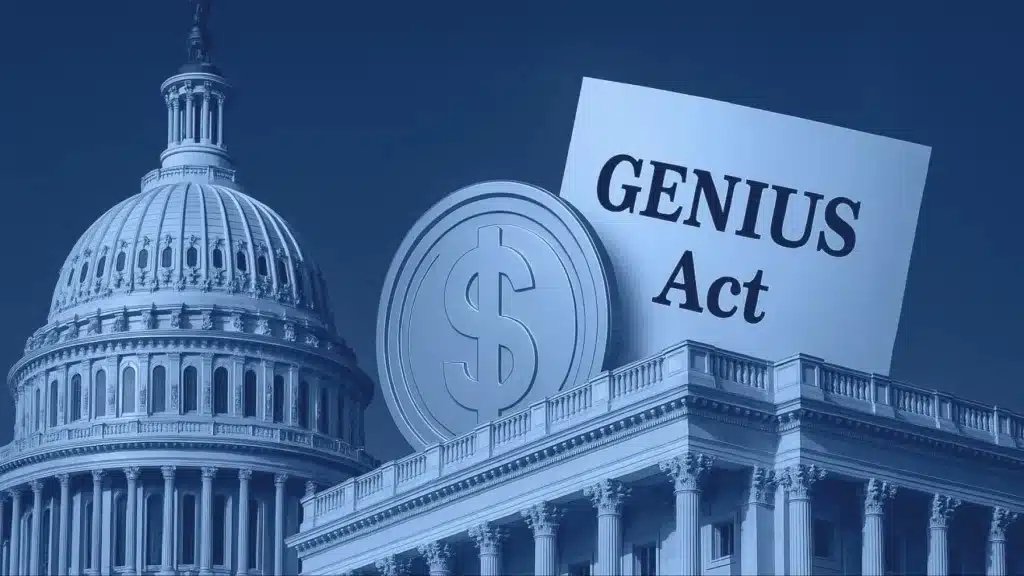
U.S. Treasury invites feedback on groundbreaking stablecoin regulations under GENIUS. Key questions around stablecoin tax treatment and foreign issuer rules. Treasury explores marketing restrictions, oversight balance, and AML enforcement options. The U.S. Treasury Department is now inviting public feedback on the implementation of the groundbreaking GENIUS Act, the first piece of crypto-specific legislation passed in the U.S. this summer. The new law is a milestone in terms of regulation of stablecoins, as the Treasury is aiming to balance the need to innovate and the aim of protecting consumers and monetary stability. According to Treasury officials, the GENIUS Act is designed to stimulate the growth of payment stablecoins while addressing potential risks related to illicit financial activities and maintaining overall economic stability. The department especially shows interest in the acquisition of data that could assist in refining the regulatory guidelines as it proceeds with the writing of its formal proposal. The commenting is active through the October 20 deadline, which gives both opponents and players in the industry time to express their views. One of the most pressing questions under consideration is how the IRS will handle the federal income tax treatment of stablecoins. The GENIUS Act does not directly cover this, and there is room to interpret and make decisions by regulation in the future. Also unclear is when and how foreign issuers can be allowed to offer stablecoins in the U.S., and it does not look like there is a timeline involved in making any changes. Also Read: Ripple Partners with DZ BANK to Launch Institutional Digital Asset Custody Solution Key Areas Under Scrutiny as Treasury Prepares Stablecoin Regulations Several key issues are currently up for discussion as part of the Treasury’s review of the GENIUS Act’s implementation. These include whether stablecoins should have certain marketing limitations, whether it should be at the state or federal level, and how the current anti-money laundering (AML) and sanctions policies will relate to digital assets. Moreover, the Treasury is analyzing how the current regulations, such as the Bank Secrecy Act (BSA), are capable of mitigating the risks of digital assets. This is after it was earlier sought to seek the views of people on the detection of illicit use in the digital asset markets. As the Treasury moves toward finalizing the regulations, it is clear that the department aims to craft a robust and flexible framework that can adapt to the evolving landscape of digital currencies. The outcome will have lasting implications for the future of stablecoin regulation in the U.S., shaping the path forward for both domestic and international players in the crypto space. Also Read: Shiba Inu Faces Major Selling Pressure as 157 Billion SHIB Floods Exchanges! The post U.S. Treasury Seeks Public Input on Game-Changing Stablecoin Regulations appeared first on 36Crypto.
Share
Coinstats2025/09/20 17:22