The post WTI holds steady below $63.00 ahead of US-Iran nuclear talks appeared on BitcoinEthereumNews.com. West Texas Intermediate (WTI) US Crude Oil prices struggleThe post WTI holds steady below $63.00 ahead of US-Iran nuclear talks appeared on BitcoinEthereumNews.com. West Texas Intermediate (WTI) US Crude Oil prices struggle

WTI holds steady below $63.00 ahead of US-Iran nuclear talks

West Texas Intermediate (WTI) US Crude Oil prices struggle to capitalize on a modest Asian uptick on Monday and currently trade just below the $63.00 mark, up less than 0.40% for the day. The commodity, meanwhile, remains close to a nearly two-week low touched on Friday as traders keenly await the second round of indirect US-Iran talks this week.

The two countries renewed negotiations earlier this month to tackle their decades-long dispute over Iran’s nuclear program. US President Donald Trump said last week that a deal with Iran is possible over the next month. Moreover, Iran has shown readiness for compromises to revive a nuclear deal with the US that delivers economic benefits for both sides. This diminishes the odds of a military confrontation and the risk of supply disruption, which, in turn, acts as a headwind for Crude Oil prices.

The US, however, has dispatched a second aircraft carrier to the region and is preparing for the possibility of a sustained military campaign if the talks do not succeed. In response, Iran’s Revolutionary Guards have warned that they could retaliate against any US military base in case of strikes on their territory. This keeps geopolitical risk premium in play and offer some support to Crude Oil prices, warranting some caution for aggressive bearish traders or positioning for any meaningful decline.

Meanwhile, softer US consumer inflation figures released on Friday lifted market bets that the US Federal Reserve (Fed) will lower borrowing costs in June. This, in turn, fails to assist the US Dollar (USD) in attracting any meaningful buyers, which, in turn, is seen as acting as a tailwind for the USD-denominated commodity. Hence, strong follow-through selling is needed to confirm a near-term top for Crude Oil prices around the $66.25 area, or a nearly five-month high touched in January.

WTI Oil FAQs

WTI Oil is a type of Crude Oil sold on international markets. The WTI stands for West Texas Intermediate, one of three major types including Brent and Dubai Crude. WTI is also referred to as “light” and “sweet” because of its relatively low gravity and sulfur content respectively. It is considered a high quality Oil that is easily refined. It is sourced in the United States and distributed via the Cushing hub, which is considered “The Pipeline Crossroads of the World”. It is a benchmark for the Oil market and WTI price is frequently quoted in the media.

Like all assets, supply and demand are the key drivers of WTI Oil price. As such, global growth can be a driver of increased demand and vice versa for weak global growth. Political instability, wars, and sanctions can disrupt supply and impact prices. The decisions of OPEC, a group of major Oil-producing countries, is another key driver of price. The value of the US Dollar influences the price of WTI Crude Oil, since Oil is predominantly traded in US Dollars, thus a weaker US Dollar can make Oil more affordable and vice versa.

The weekly Oil inventory reports published by the American Petroleum Institute (API) and the Energy Information Agency (EIA) impact the price of WTI Oil. Changes in inventories reflect fluctuating supply and demand. If the data shows a drop in inventories it can indicate increased demand, pushing up Oil price. Higher inventories can reflect increased supply, pushing down prices. API’s report is published every Tuesday and EIA’s the day after. Their results are usually similar, falling within 1% of each other 75% of the time. The EIA data is considered more reliable, since it is a government agency.

OPEC (Organization of the Petroleum Exporting Countries) is a group of 12 Oil-producing nations who collectively decide production quotas for member countries at twice-yearly meetings. Their decisions often impact WTI Oil prices. When OPEC decides to lower quotas, it can tighten supply, pushing up Oil prices. When OPEC increases production, it has the opposite effect. OPEC+ refers to an expanded group that includes ten extra non-OPEC members, the most notable of which is Russia.

Source: https://www.fxstreet.com/news/wti-holds-steady-below-6300-ahead-of-second-round-of-us-iran-nuclear-talks-202602160245

Market Opportunity
Polytrade Logo
Polytrade Price(TRADE)
$0.03607
$0.03607$0.03607
-3.34%
USD
Polytrade (TRADE) Live Price Chart
Disclaimer: The articles reposted on this site are sourced from public platforms and are provided for informational purposes only. They do not necessarily reflect the views of MEXC. All rights remain with the original authors. If you believe any content infringes on third-party rights, please contact [email protected] for removal. MEXC makes no guarantees regarding the accuracy, completeness, or timeliness of the content and is not responsible for any actions taken based on the information provided. The content does not constitute financial, legal, or other professional advice, nor should it be considered a recommendation or endorsement by MEXC.

You May Also Like

Ex-Alipay UK Chief Eva Zhang to Lead Blockscout Into AI-Driven Growth

Ex-Alipay UK Chief Eva Zhang to Lead Blockscout Into AI-Driven Growth

Blockscout, the leading open-source block explorer for EVM chains, has appointed Eva Zhang, former CEO of Alipay UK, as its new chief executive officer.
Share
Blockchainreporter2025/09/18 19:00
Gold price in Malaysia: Rates on February 16

Gold price in Malaysia: Rates on February 16

The post Gold price in Malaysia: Rates on February 16 appeared on BitcoinEthereumNews.com. Gold prices fell in Malaysia on Monday, according to data compiled by
Share
BitcoinEthereumNews2026/02/16 13:21
U.S. Treasury Seeks Public Input on Game-Changing Stablecoin Regulations

U.S. Treasury Seeks Public Input on Game-Changing Stablecoin Regulations

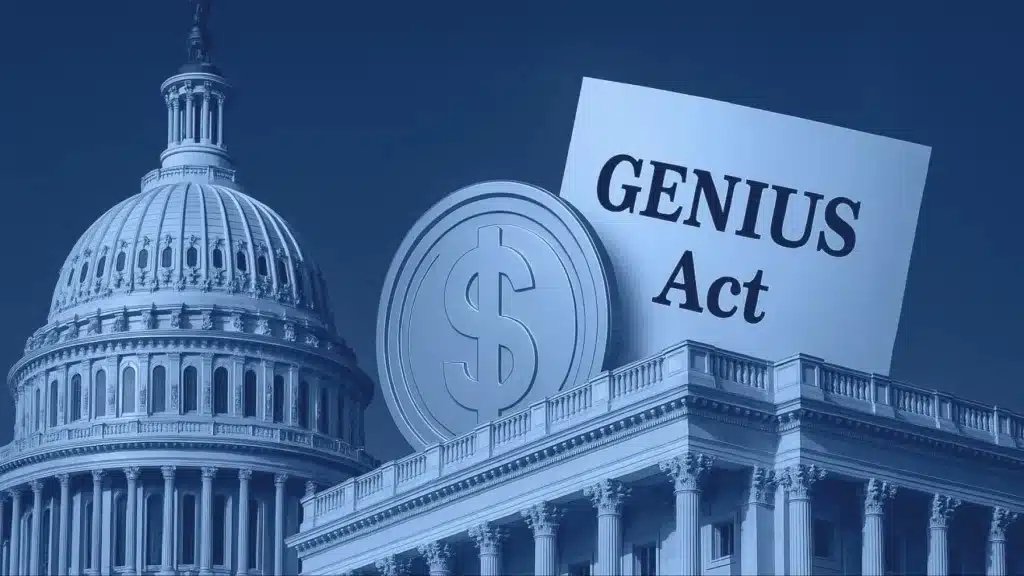
U.S. Treasury invites feedback on groundbreaking stablecoin regulations under GENIUS. Key questions around stablecoin tax treatment and foreign issuer rules. Treasury explores marketing restrictions, oversight balance, and AML enforcement options. The U.S. Treasury Department is now inviting public feedback on the implementation of the groundbreaking GENIUS Act, the first piece of crypto-specific legislation passed in the U.S. this summer. The new law is a milestone in terms of regulation of stablecoins, as the Treasury is aiming to balance the need to innovate and the aim of protecting consumers and monetary stability. According to Treasury officials, the GENIUS Act is designed to stimulate the growth of payment stablecoins while addressing potential risks related to illicit financial activities and maintaining overall economic stability. The department especially shows interest in the acquisition of data that could assist in refining the regulatory guidelines as it proceeds with the writing of its formal proposal. The commenting is active through the October 20 deadline, which gives both opponents and players in the industry time to express their views. One of the most pressing questions under consideration is how the IRS will handle the federal income tax treatment of stablecoins. The GENIUS Act does not directly cover this, and there is room to interpret and make decisions by regulation in the future. Also unclear is when and how foreign issuers can be allowed to offer stablecoins in the U.S., and it does not look like there is a timeline involved in making any changes. Also Read: Ripple Partners with DZ BANK to Launch Institutional Digital Asset Custody Solution Key Areas Under Scrutiny as Treasury Prepares Stablecoin Regulations Several key issues are currently up for discussion as part of the Treasury’s review of the GENIUS Act’s implementation. These include whether stablecoins should have certain marketing limitations, whether it should be at the state or federal level, and how the current anti-money laundering (AML) and sanctions policies will relate to digital assets. Moreover, the Treasury is analyzing how the current regulations, such as the Bank Secrecy Act (BSA), are capable of mitigating the risks of digital assets. This is after it was earlier sought to seek the views of people on the detection of illicit use in the digital asset markets. As the Treasury moves toward finalizing the regulations, it is clear that the department aims to craft a robust and flexible framework that can adapt to the evolving landscape of digital currencies. The outcome will have lasting implications for the future of stablecoin regulation in the U.S., shaping the path forward for both domestic and international players in the crypto space. Also Read: Shiba Inu Faces Major Selling Pressure as 157 Billion SHIB Floods Exchanges! The post U.S. Treasury Seeks Public Input on Game-Changing Stablecoin Regulations appeared first on 36Crypto.
Share
Coinstats2025/09/20 17:22