DeFi

DeFi eliminates intermediaries by using smart contracts on blockchains to provide financial services like lending, borrowing, and trading. In 2026, the "DeFi 3.0" era is defined by Institutional DeFi and the integration of Real-World Assets (RWA). From liquidity provisioning on Uniswap to advanced lending on Aave, this tag tracks the evolution of autonomous financial systems, yield optimization, and the rise of AI-driven portfolio management in the decentralized economy.

67934 Articles
Created: 2026/02/02 18:52
Updated: 2026/02/02 18:52
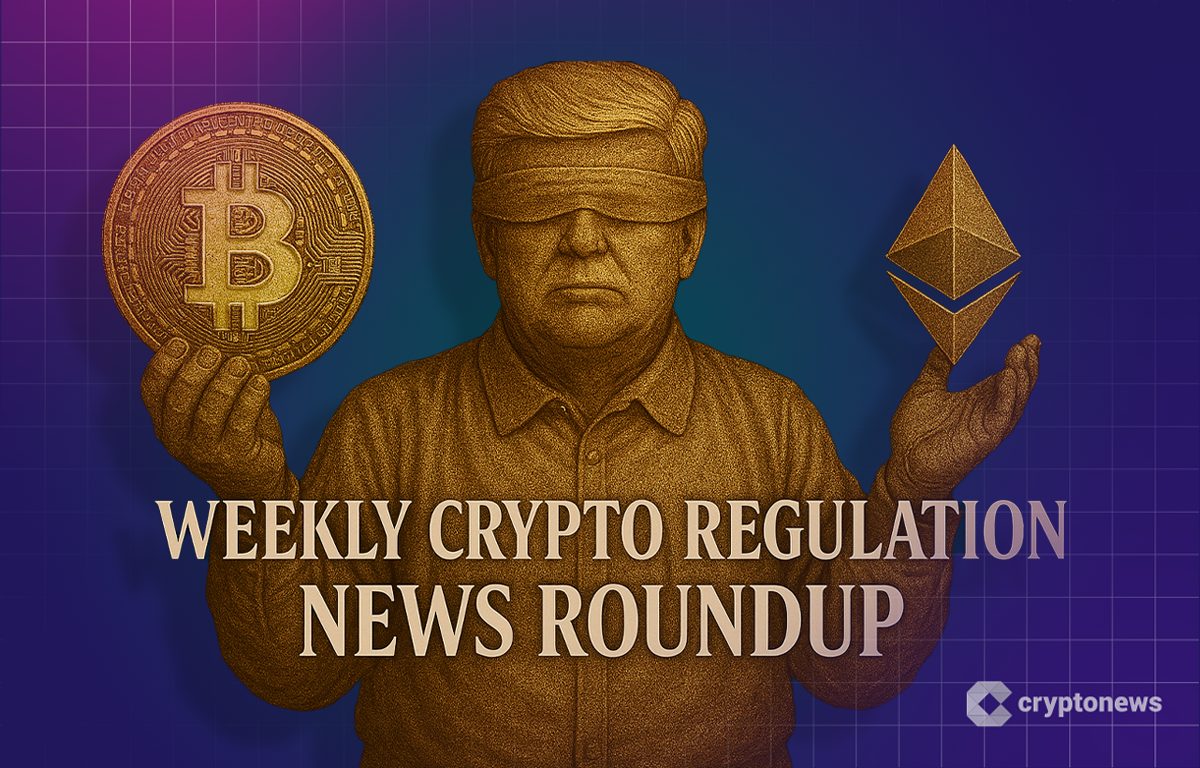
Weekly Crypto Regulation Roundup: Trump Slams Musk, Tim Scott Backs Blockchain, and Broker Rule Gets Buried

Weekly Crypto Regulation Roundup: Trump Slams Musk, Tim Scott Backs Blockchain, and Broker Rule Gets Buried

This past week has seen U.S. crypto policy thrust back into the spotlight — but not just in the legislative chambers. A political feud between two of the most influential names in tech and governance — Donald Trump and Elon Musk — spilled out onto social media, while regulatory milestones unfolded in the Senate and Treasury Department. The conflicting headlines reflect a reality that the crypto sector knows all too well: when it comes to digital asset policy in the United States, clarity remains elusive. Trump Slams Musk Amid New Political Party Formation U.S. President Donald Trump’s war of words with Elon Musk took a sharp turn this week, as the president publicly criticized Musk over the formation of a new political party. 🇺🇸 U.S. President Donald Trump called tech billionaire Elon Musk a "train wreck" in a social media post on Sunday. #DonaldTrump #ElonMusk https://t.co/aDoUhWXSVR — Cryptonews.com (@cryptonews) July 7, 2025 On July 6, Trump lashed out on Truth Social, calling Musk a “train wreck” who had gone “off the rails” over the past five weeks. This response followed Musk’s July 5 post on X (formerly Twitter) announcing the launch of the “America Party.” Trump, a long-time critic of third-party movements, said Musk’s efforts would lead only to “disruption and chaos,” arguing such ventures have never succeeded in the U.S. political landscape. The clash marks an escalation in what appears to be a growing political and ideological rift between two powerful figures with vested interests in the future of technology, freedom of speech, and digital assets. Trump also took aim at the Democratic Party, accusing them of losing both their “confidence and their minds” in the ongoing cultural and financial shifts, particularly regarding crypto policy. Digital Assets Are Not Going Away, Senator Tim Scott Says Meanwhile, constructive progress on crypto regulation was unfolding in Washington. Senate Banking Committee Chairman Tim Scott (R-SC) led a July 9 hearing titled “From Wall Street to Web3” —the Senate’s first full committee hearing focused on digital assets. In his opening remarks, Scott stressed that blockchain technology and digital assets are here to stay. He urged fellow lawmakers to build a robust and balanced regulatory framework that protects investors while allowing innovation to thrive. 🇺🇸 Senator Tim Scott told his fellow U.S. lawmakers that digital assets are not going away in a committee hearing on Wednesday. #TimScott #Senate https://t.co/8Akk1p8zrs — Cryptonews.com (@cryptonews) July 10, 2025 Scott’s comments were supported by testimony from Ripple CEO Brad Garlinghouse, Blockchain Association’s Summer Mersinger, and Chainalysis co-founder Jonathan Levin. He stressed the need for America to maintain a leadership role in shaping the future of digital finance, rather than ceding influence to jurisdictions like the UAE and Singapore. The hearing highlighted bipartisan acknowledgment that digital asset markets require clearer regulatory guidance, even as lawmakers differ on the methods of implementation. US Treasury Officially Scraps Crypto Broker Reporting Rules In a move for DeFi advocates, the U.S. Treasury Department has officially repealed a controversial broker reporting rule. The regulation, originally introduced under the Biden administration in late 2024, sought to impose broker-level reporting requirements on entities involved in decentralized finance and crypto infrastructure. However, following a successful challenge under the Congressional Review Act—and a signature from President Trump—the rule has now been nullified. The scrapped rule, titled “Gross Proceeds Reporting by Brokers,” would have gone into effect in February 2025 and required extensive data collection from DeFi platforms. Its repeal has been welcomed by industry groups, who saw the rule as overly broad and detrimental to innovation. The Treasury will now revert to pre-2024 guidance, which exempts validators and wallet providers from broker classification, marking a key policy win for decentralized systems. US Banking Regulator OCC Gets New Chief with Crypto Roots Finally, regulatory leadership is taking a crypto-savvy turn. Jonathan Gould, a former Bitfury executive with deep experience in blockchain and financial policy, has been confirmed as the new head of the Office of the Comptroller of the Currency (OCC). Approved by a 50-45 Senate vote, Gould becomes the OCC’s first permanent chief since 2020. Gould’s appointment shows a potential shift in how the U.S. banking regulator approaches digital asset oversight. During his prior tenure at the OCC under the Trump administration, Gould helped shape key positions on fintech and crypto integration in banking. With his return, stakeholders hope the agency will adopt a more innovation-forward stance—especially as traditional banks explore blockchain-based products such as tokenized deposits and on-chain settlement rails. Together, this week’s events reflect the growing entanglement between crypto, regulation, and politics. Whether through partisan clashes or bipartisan hearings, the evolution of U.S. digital asset policy is entering a more complex and consequential phase.

Author: CryptoNews
Opyn’s top minds defect to Coinbase in strategic shift toward onchain derivatives

Opyn’s top minds defect to Coinbase in strategic shift toward onchain derivatives

Andrew Leone and Joe Clark built some of DeFi’s most groundbreaking derivatives. Now, they’re taking that expertise to Coinbase, and the implications for onchain markets could be massive. On July 11, crypto exchange Coinbase announced it had poached Opyn’s core…

Author: Crypto.news
Inception, the EigenLayer-based re-staking protocol, announced the termination of operations

Inception, the EigenLayer-based re-staking protocol, announced the termination of operations

PANews reported on July 11 that Inception, a re-staking protocol built on EigenLayer, announced the termination of operations. In the past two years, Inception has successfully launched more than 15

Author: PANews
Crypto Investment App RandomBag.fun Powered by ZetaChain Now Live

Crypto Investment App RandomBag.fun Powered by ZetaChain Now Live

PANews reported on July 11 that according to official news, the new trend-based crypto investment application RandomBag.fun is now officially launched and has cooperated with ZetaChain as its cross-chain first-level

Author: PANews
Ethereum Foundation offloads $25.7m ETH to a public company in rare deal

Ethereum Foundation offloads $25.7m ETH to a public company in rare deal

When the Ethereum Foundation offloads ETH, markets flinch. But this time, they handpicked SharpLink as the buyer. Behind the $25.7 million transaction lies a deeper narrative about staking, institutional alignment, and Ethereum’s next phase. On July 11, Minneapolis-based iGaming giant…

Author: Crypto.news
Institutions load up ETH, SOL; XYZVerse presale hits final stage, eyes 1,000x growth

Institutions load up ETH, SOL; XYZVerse presale hits final stage, eyes 1,000x growth

As Ethereum and Solana draw big-money interest, sports-themed meme token XYZVerse is stealing the spotlight with a final presale surge and bold 1,000x potential. #partnercontent

Author: Crypto.news
GMX Hacker Strikes White-Hat Deal: $42M Heist Turns $3M Profit After $5M Bounty Offer

GMX Hacker Strikes White-Hat Deal: $42M Heist Turns $3M Profit After $5M Bounty Offer

On July 9, decentralized exchange GMX became the latest DeFi protocol to suffer a major exploit, with over $42 million in digital assets reportedly siphoned from its vaults. According to data from DeBank, the breach involved a suspicious outflow of funds to a single wallet address: 0xdf3340a436c27655ba62f8281565c9925c3a5221. The stolen funds were then bridged from Arbitrum—a Layer 2 Ethereum scaling network—back to the Ethereum mainnet, a tactic often used by exploiters to hide or launder assets. In a surprising turn, blockchain analytics platform Lookonchain reported that the attacker agreed to a white-hat deal, opting to return the funds in exchange for a $5 million bounty. The #GMX hacker chose to return the stolen $42M assets for a $5M white-hat bug bounty. Currently, $10.49M $FRAX has been returned. Another $32M assets had been swapped into 11,700 $ETH , which is now worth $35M—netting a ~$3M gain. 🤔Will the hacker return all 11,700… pic.twitter.com/XjBlAK81Mf — Lookonchain (@lookonchain) July 11, 2025 White-hat deals are occasionally used in DeFi when exploiters are willing to return funds in good faith, often after revealing critical vulnerabilities. This approach seeks to avoid prolonged investigations and reputational damage while recovering assets for affected users. Partial Returns and a Profitable Arbitrage According to Lookonchain’s analysis, the hacker has already returned $10.49 million worth of FRAX stablecoins. However, the remaining $32 million was not simply held—it was swapped into 11,700 ETH and is now worth $35 million, resulting in an unexpected $3 million profit due to ETH price appreciation. The move is sparking debate over whether the attacker will return the full 11,700 ETH or simply send back $32 million and keep the additional gain. As of now, the hacker has yet to confirm their intentions publicly. The incident is raising questions about how white-hat agreements are enforced and whether attackers can ethically retain profits earned post-exploit. While some see the return of most funds as a net positive, others argue that walking away with millions in profit—even with partial compliance—undermines the very spirit of the white-hat model. DeFi Security and the Ethics of Exploitation The incident highlights ongoing security challenges within decentralized finance, particularly in relation to large asset vaults and cross-chain functionality. As of now, GMX has not confirmed whether a formal white-hat agreement was established prior to the partial return of funds. The situation remains under observation, with the outcome likely to influence broader discussions around the role of white-hat arrangements and ethical boundaries in DeFi. GMX Confirms $42M Exploit Rooted in Re-Entrancy Bug In its lastest post GMX confirms that the $42 million exploit was caused by a re-entrancy vulnerability within its V1 contracts. Although the affected function was protected by a nonReentrant modifier, it only applied within the same contract, allowing the attacker to bypass this safeguard and manipulate the BTC average short price through the Vault contract. https://t.co/1rfDbjDQ0r — GMX 🫐 (@GMX_IO) July 10, 2025 By exploiting this loophole, the attacker artificially drove the GLP price up and profited by redeeming inflated GLP tokens after opening a large position using a flash loan. The vulnerability was tied to how GMX V1 handled pricing calculations across separate contracts, a structure that has been revised in GMX V2, where calculations and executions now occur within the same contract to avoid such risks. In response, GMX paused trading on Avalanche, engaged with security partners and major infrastructure providers, and initiated direct on-chain communication with the exploiter. Minting and redemption of GLP on Arbitrum has been temporarily disabled pending the protocol’s transition plan and user reimbursement process. GMX confirmed that GLP minting on Avalanche is also paused, though redemptions remain active. V1 positions will be wound down and migrated to a reimbursement pool for affected users, and all remaining V1 orders should be cancelled. GMX has also issued a warning to all V1 forks, urging them to immediately implement fixes and security audits to avoid similar vulnerabilities.

Author: CryptoNews
With the United States taking the lead, how can Hong Kong win the competition of “global tokenization”?

With the United States taking the lead, how can Hong Kong win the competition of “global tokenization”?

Editor's note: On July 3, the South China Morning Post website published an article by Cobo COO Lily Z. King, which deeply analyzed how Hong Kong can seize the initiative

Author: PANews
Why holding ETH is the best way to participate in the stablecoin wave?

Why holding ETH is the best way to participate in the stablecoin wave?

By Maria Shen & Sanjay Shah, Electric Capital Compiled by: TechFlow *Note: Throughout this article, “Ethereum” refers to the network and “ETH” refers to the asset that powers it. Far

Author: PANews
Ethereum price breaks through $3,000 after ETH Foundation moves 21,000 ETH in the past two months

Ethereum price breaks through $3,000 after ETH Foundation moves 21,000 ETH in the past two months

Ethereum has surpassed $3,000 in value, following the ETH Foundation transferring a total of 21,000 ETH in the past two months to its internal Gnosis Safe Proxy address. According to data from crypto.news, ETH (ETH) touched on a new high…

Author: Crypto.news