Index

A crypto Index provides a way for investors to gain diversified exposure to a specific basket of digital assets through a single tokenized product. These indices often track specific sectors, such as DeFi, DePIN, or RWA, and are automatically rebalanced via smart contracts. In 2026, AI-managed thematic indices have become the gold standard for passive investing, allowing users to track the "blue chips" of the Web3 economy without manual portfolio management. This tag covers index methodology, rebalancing frequency, and the benefits of diversified crypto baskets.

24787 Articles
Created: 2026/02/02 18:52
Updated: 2026/02/02 18:52
XRP price weathers market-wide volatility as Ripple-SEC file motion to release $125 million held in escrow

XRP price weathers market-wide volatility as Ripple-SEC file motion to release $125 million held in escrow

Ripple’s (XRP) price is currently trading at around $2.14 at the time of writing on Friday as investors in the crypto market navigate the sudden spike in volatility triggered by geopolitical tensions in the Middle East.

Author: Fxstreet
U.S. stock market opens: the three major indexes open sharply lower, and the crypto sector falls across the board

U.S. stock market opens: the three major indexes open sharply lower, and the crypto sector falls across the board

PANews reported on June 13 that the Dow Jones Industrial Average fell 1%, the S&P 500 fell 0.9%, and the Nasdaq fell 1.06%. The crypto sector fell across the board,

Author: PANews
Bitcoin eyes $110k, but this new memecoin could make investors wealthy

Bitcoin eyes $110k, but this new memecoin could make investors wealthy

As Bitcoin edges toward $110k, a new contender, XYZVerse, is drawing attention for its blend of sports fandom and memecoin momentum. #partnercontent

Author: Crypto.news
Ethereum, Solana, Dogecoin Lead Crypto Losses As Iran Retaliates With Drone Barrage After Israel Air Strikes

Ethereum, Solana, Dogecoin Lead Crypto Losses As Iran Retaliates With Drone Barrage After Israel Air Strikes

Ethereum (ETH), Solana (SOL) and Dogecoin (DOGE) took the heaviest hits after Israel’s air strikes on Iran’s nuclear and ballistic missile sites rattled markets. The crypto market slumped 4% overall

Author: Insidebitcoins
Tencent reopens talks to acquire South Korea’s Nexon, a game developer exploring blockchain

Tencent reopens talks to acquire South Korea’s Nexon, a game developer exploring blockchain

Chinese tech giant Tencent is reportedly considering an acquisition of South Korean game developer Nexon. A Bloomberg report citing unnamed sources claimed that Tencent has approached the family of Nexon’s late founder, Kim Jung-ju, to explore a potential deal. While…

Author: Crypto.news
Bitcoin Price Dips Below $104K After Israeli Strikes on Iran Spark Global Selloff

Bitcoin Price Dips Below $104K After Israeli Strikes on Iran Spark Global Selloff

Key Takeaways: Bitcoin dropped over 4% as Israeli airstrikes on Iran sparked a broad selloff. The U.S. began evacuations from Iraq amid fears of escalating regional conflict. Crypto markets turned risk-off, with Ethereum and XRP also posting sharp losses. Bitcoin fell sharply late Thursday, sliding over 4% to $103,556 following Israeli airstrikes on Iran that intensified already fragile Middle East tensions. The drop from a 24-hour high of $108,500 came as investors reacted to the prospect of a broader geopolitical crisis, triggering a retreat from risk assets. The sharp sell-off led to the liquidation of $427 million in long positions in the past 24 hours. Israeli officials confirmed the airstrikes targeted military infrastructure near Tehran and Tabriz, describing the action as a preemptive measure in response to Iran’s nuclear threat. Bitcoin Drops as Israel’s Attack on Iran Could Continue for Days Prime Minister Benjamin Netanyahu called the operation a necessary step to “remove this threat,” adding it would continue “as many days as it takes.” Iran has yet to issue an official response, but state media reported explosions and airspace closures. Meanwhile, the U.S. began pulling diplomats from Iraq and offered voluntary evacuations to military families in neighboring countries. The State Department also issued warnings for American citizens to leave Iraq, citing regional instability. In Washington, Secretary of State Marco Rubio said Israel acted unilaterally but had informed the U.S. beforehand. Former Trump advisor Steve Witkoff noted that nuclear negotiations with Iran are still on the table, though risks of escalation remain. Historically, Bitcoin has shown sensitivity to geopolitical unrest, often falling as traders reduce exposure to volatile assets. While the crypto asset is seen by some as a long-term hedge, its short-term price often mirrors broader risk sentiment. Ethereum followed the downward trend, slipping below $2,500, while XRP retreated to $2.10, adding to the market-wide pressure. Bitcoin Struggles to Hold $104K Amid Tensions Bitcoin is trading at $103,990 at the time of writing, showing signs of stabilization after a sharp 4% drop triggered by rising geopolitical tensions in the Middle East. Price briefly dipped below $103,000 following Israeli airstrikes on Iran but has since bounced modestly. On the 2-hour chart, BTC remains under pressure, with Bollinger Bands widening and price hugging the lower band—a sign of increased volatility and bearish momentum. Bitcoin Just Lost Its Breakout — Here’s the Support Level That Matters Now Why this report matters Bitcoin’s breakout above $106,000 didn’t hold, and that could mean more than just a failed rally. Ethereum’s funding rate has quietly collapsed, even as open interest surged… pic.twitter.com/7XH0NMaK7I — 10x Research (@10x_Research) June 13, 2025 The Relative Strength Index (RSI) has dropped to 25.51, deep in oversold territory, indicating potential for a short-term relief bounce. However, MACD values remain heavily negative (-438.59 MACD line), suggesting bearish momentum is still dominant. Zooming into the 30-minute timeframe, price is struggling to reclaim the $105,000 zone. RSI stands at 32.30, also near oversold levels, while MACD shows downward expansion, further reinforcing downside risk if support fails. Bollinger Bands on this timeframe show a bearish squeeze breaking to the downside. The 1-minute chart reflects short-term recovery attempts, with RSI bouncing to 66.49 and MACD crossing bullishly. Still, this minor uptick is not yet confirmed by higher timeframes, suggesting caution is warranted. Key levels to watch include immediate support at $102,533 and resistance at $105,693. A close above $105,000 could ease selling pressure, but failure to reclaim it may open the door to further losses toward $100K. For now, sentiment remains risk-off, and BTC bulls must defend current levels to avoid deeper correction.

Author: CryptoNews
Coinbase Research Report: Three Major Themes of the Crypto Market in the Second Half of 2025

Coinbase Research Report: Three Major Themes of the Crypto Market in the Second Half of 2025

By David Duong Compiled and edited by: BitpushNews The trend of companies purchasing crypto assets with leveraged financing may trigger systemic risks in the medium and long term, such as

Author: PANews
Solana dips 10% despite DeFi Development Corp's plan to raise $5 billion to boost SOL treasury

Solana dips 10% despite DeFi Development Corp's plan to raise $5 billion to boost SOL treasury

Solana (SOL) is down 10% on Thursday after DeFi Development Corporation (DFDV) announced an equity line of credit agreement with RK Capital Management to raise $5 billion in sales of its shares to stack additional SOL.

Author: Fxstreet
Donald Trump Warns Fed: Slash Rates or I’ll “Force Something” – Powell’s Job Still Safe

Donald Trump Warns Fed: Slash Rates or I’ll “Force Something” – Powell’s Job Still Safe

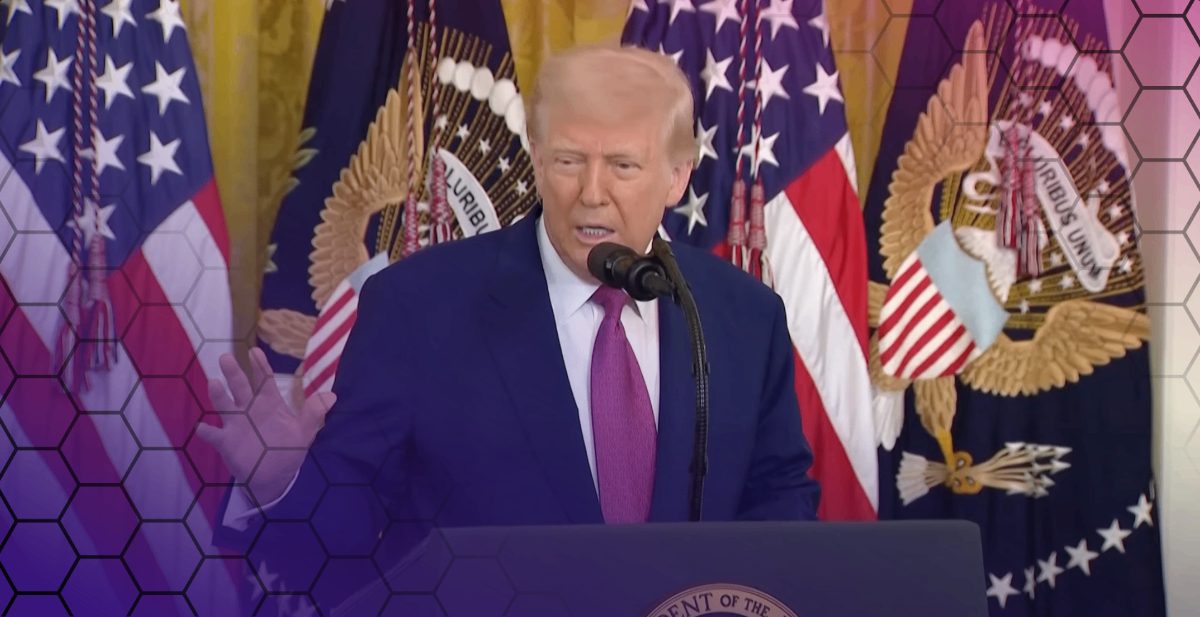
President Donald Trump has escalated his public feud with Federal Reserve Chair Jerome Powell, branding him a “numbskull” while simultaneously pledging not to fire the central bank chief despite mounting frustration over the Fed’s reluctance to slash interest rates. Speaking at a White House event Thursday, Trump delivered his harshest criticism of Powell’s monetary policy approach, claiming that lowering rates by just one percentage point could save the United States $300 billion annually, while a two-point reduction would generate $600 billion in savings. Why Trump Wants to ‘Force Something’ Trump’s latest verbal assault marks the third time in two days that his administration has publicly targeted Powell. It follows similar criticisms from Commerce Secretary Howard Lutnick and Vice President JD Vance, who called the Fed’s stance “monetary malpractice.” The president has been saying this for a while, but it's even more clear: the refusal by the Fed to cut rates is monetary malpractice. https://t.co/HqUjWxwcHs — JD Vance (@JDVance) June 11, 2025 The coordinated pressure campaign came from the administration’s growing impatience with the central bank’s independence, particularly as Trump faces re-election pressures and seeks to demonstrate economic leadership. Despite repeatedly calling Powell “Too Late” and questioning why firing him would be controversial, Trump stopped short of threatening termination, instead ominously suggesting he “may have to force something” if rate cuts don’t materialize soon. The timing of Trump’s criticism appears strategic, coming as recent economic indicators show inflation cooling and energy prices declining due to increased domestic drilling under his “drill, baby, drill” energy policy. US Inflation Rate Source: TradingEconomics Powell’s current term as Fed chair expires in May 2026, and Trump has hinted that an announcement regarding his nominee for the next Fed chair could come soon. Harvard legal experts suggest that while Trump may have constitutional authority to remove Powell, such a move would likely trigger severe market volatility and undermine the Fed’s credibility as an inflation fighter, potentially causing long-term interest rates to spike even if short-term rates were cut. Presidential Pressure Campaign Intensifies Fed Independence Debate The escalating confrontation between Trump and Powell is a fundamental clash over Federal Reserve independence with deep constitutional and economic implications. Trump’s frustration stems from his belief that the current interest rate environment unnecessarily burdens federal borrowing costs, particularly as the government faces mounting short-term debt obligations approved during the Biden administration. Europe Rate Cuts Source: European Central Bank The president argued that Europe has implemented ten rate cuts while the Fed has delivered none, despite similar economic conditions and falling inflation metrics. Legal scholars say that while the Federal Reserve Act of 1913 allows governors to be removed “for cause,” the Supreme Court’s recent decisions have gradually eroded the traditional “for cause” protections that independent agencies have enjoyed for 85 years. Harvard Law School’s Daniel Tarullo, a former Fed Board member, suggests that three conservative justices have hinted at potentially treating the Federal Reserve differently from other agencies, possibly creating a carve-out based on the central bank’s historical precedent dating back to the First and Second Banks of the United States. However, market dynamics may provide Powell with more protection than legal statutes, as any attempt to remove the Fed chair would likely trigger immediate and severe market reactions that would prove counterproductive to Trump’s economic objectives. The anticipated market volatility is a powerful disincentive, particularly given that Treasury Secretary Scott Bessent has focused on maintaining stable 10-year Treasury rates, which are key for economic investment decisions. Recent economic indicators have strengthened Trump’s argument for immediate monetary easing. Inflation data show continued price stability and energy costs declining due to expanded domestic oil production. US Energy Inflation Source: TradingEconomics The favorable Producer Price Index reading in May has calmed fears about tariff-induced inflation spikes, emboldening the administration to intensify pressure on the Fed while markets increasingly price in potential rate cuts later this year.

Author: CryptoNews
XRP, Solana, Cardano Could Join Nasdaq’s Crypto Index

XRP, Solana, Cardano Could Join Nasdaq’s Crypto Index

Nasdaq has filed a proposed rule change with the US Securities and Exchange Commission (SEC) to expand its benchmark Nasdaq Crypto Index (NCI) to include Ripple (XRP), Solana (SOL), Cardano

Author: Insidebitcoins