Launchpad

Launchpads are decentralized platforms that facilitate early-stage fundraising for new Web3 projects through Initial DEX Offerings (IDOs). They provide investors with curated access to token sales while offering startups a community-driven capital injection. In 2026, launchpads have evolved into full-stack incubators, focusing on project quality and long-term sustainability. Follow this tag for the latest in token distribution models, tier-based participation, and the emergence of the next generation of "unicorn" protocols across various blockchain ecosystems.

2908 Articles
Created: 2026/02/02 18:52
Updated: 2026/02/02 18:52

The Stars We Forgot: A First Principle for a Noisy World

The Stars We Forgot: A First Principle for a Noisy World

In the blinding light of a bull market, it’s easy to get lost. We attend conferences where the new kings of crypto hold court, we scroll through feeds dominated by talk of price targets and market caps, and we celebrate the fleeting narratives of the day. But in doing so, we risk forgetting the giants on whose shoulders this entire world was built. We risk forgetting the first principles. Today, August 28th, marks eleven years since the passing of a man named Hal Finney. While his body lies cryogenically frozen in Arizona, preserved in liquid nitrogen, his legacy is woven into the very fabric of the system we now trade, build upon, and debate daily. To understand the present, we must look to the past. To see the future, we must remember the origin. And in the origin story of Bitcoin, there are few figures more essential than Hal Finney. The First Follower, The Necessary Builder We all know the genesis block was mined on January 3rd, 2009, by the pseudonymous Satoshi Nakamoto. But what happened next is the part of the story that truly matters. For days, the Bitcoin network consisted of exactly two people: its creator, and the first person on Earth to believe in him. That person was Hal Finney. On January 12th, 2009, Satoshi sent Finney 10 BTC. It was the first transaction in Bitcoin’s history. It wasn’t a trade; it was a test. A signal between two nodes in the digital wilderness. Finney, already a legendary OG in the cryptography world, immediately understood the revolutionary potential of Satoshi’s whitepaper. He didn’t just read it; he downloaded the software, ran the first node besides Satoshi’s, and spent hours stress-testing the code, reporting bugs, and helping its creator patch the system in its infancy. Without Finney, the fragile experiment that is now a trillion-dollar asset class might have simply flickered and died. But in a twist of cruel irony, the same year Bitcoin was born, Finney was diagnosed with ALS. As the network he helped nurture began its slow, inexorable growth, his own body began its decline. The Satoshi Question: A Cypherpunk’s Final Puzzle The mystery of Satoshi’s identity has become a cottage industry of speculation, but the threads that connect him to Finney are too compelling to ignore. It’s a series of coincidences that feel almost poetic. In 2014, when Newsweek infamously misidentified a Japanese-American engineer named Dorian Satoshi Nakamoto as the creator of Bitcoin, a media circus descended on his quiet home in Temple City, California. But just a few blocks away, another resident of Temple City was living out his final days: Hal Finney. Did Finney, a master cryptographer, borrow the name of a neighbor for his grand pseudonym? It’s a perfect piece of cypherpunk lore. The timelines also overlap with a haunting precision. Satoshi’s public presence dwindled after 2010, with a final, definitive sign-off in April 2011: “I’ve moved on to other things.” By then, Finney’s ALS had progressed significantly. One man disappeared into the digital ether; the other was slowly consumed by a physical ailment. Finney always denied being Satoshi. But the intellectual lineage is undeniable. His 2004 creation, RPOW (Reusable Proofs of Work), was a direct precursor to Bitcoin’s consensus mechanism. It was Finney who first created a system to solve for digital scarcity using computational work. Bitcoin was the final, brilliant step in that journey: a fully decentralized version of the problem Finney had been working on for years. The True OGs and the Principle of Sacrifice The question of whether Finney was Satoshi is, ultimately, a parlor game. It misses the point. The more profound truth lies in what they did. In a world before venture capital, before launchpads, before influencers, two minds connected over a mailing list. They collaborated, tested, and supported each other to bring a radical idea to life. There were no witnesses, no applause — just two computers humming in the quiet corners of the internet. This is the first principle we have forgotten. The true OGs of this space were not driven by wealth, but by conviction. They were cypherpunks who believed, as Finney wrote in 1992, that “computer technology can be used to liberate and protect people, rather than to control them.” They were missionaries. Satoshi’s final act was the ultimate proof of this. By never moving his million-plus BTC, he performed the ultimate “proof of burn.” He proved he created the system not for personal enrichment, but for the world. His final message was not one of hype, but of quiet confidence: “If you don’t believe me or don’t get it, I don’t have time to try to convince you, sorry.” It is the spiritual totem of our community. And Finney? Even as ALS ravaged his body, leaving him to code with an eye-tracker, his final project was software to strengthen Bitcoin wallets. He contributed until the very end. A Legacy in Liquid Nitrogen If medical science ever revives Hal Finney, what world will he wake up to? He will see a trillion-dollar ecosystem he helped ignite. He will see the debates, the tribalism, the immense wealth, and the profound changes his small experiment set in motion. We cannot know what he would think. But we can choose what we remember. As we navigate the noise of the current cycle, let us remember the quiet collaboration of Satoshi and Finney. Let us remember that this all began not with a price, but with a principle. The stars that lit the way for us are gone, but their light remains. It is our duty to ensure we are still navigating by it. The Stars We Forgot: A First Principle for a Noisy World was originally published in Coinmonks on Medium, where people are continuing the conversation by highlighting and responding to this story

Author: Medium
Check Out the Best Crypto to Buy Now as Market Retests $4T

Check Out the Best Crypto to Buy Now as Market Retests $4T

It’s been a bumpy ride for the crypto market this week, but there’s a silver lining on the horizon as it retested the $4T market cap. A mix of stronger-than-expected US GDP data and Fed uncertainty has driven market movements over the past 24 hours. We’ve observed the market’s resilience and traders’ continued optimism despite […]

Author: Bitcoinist
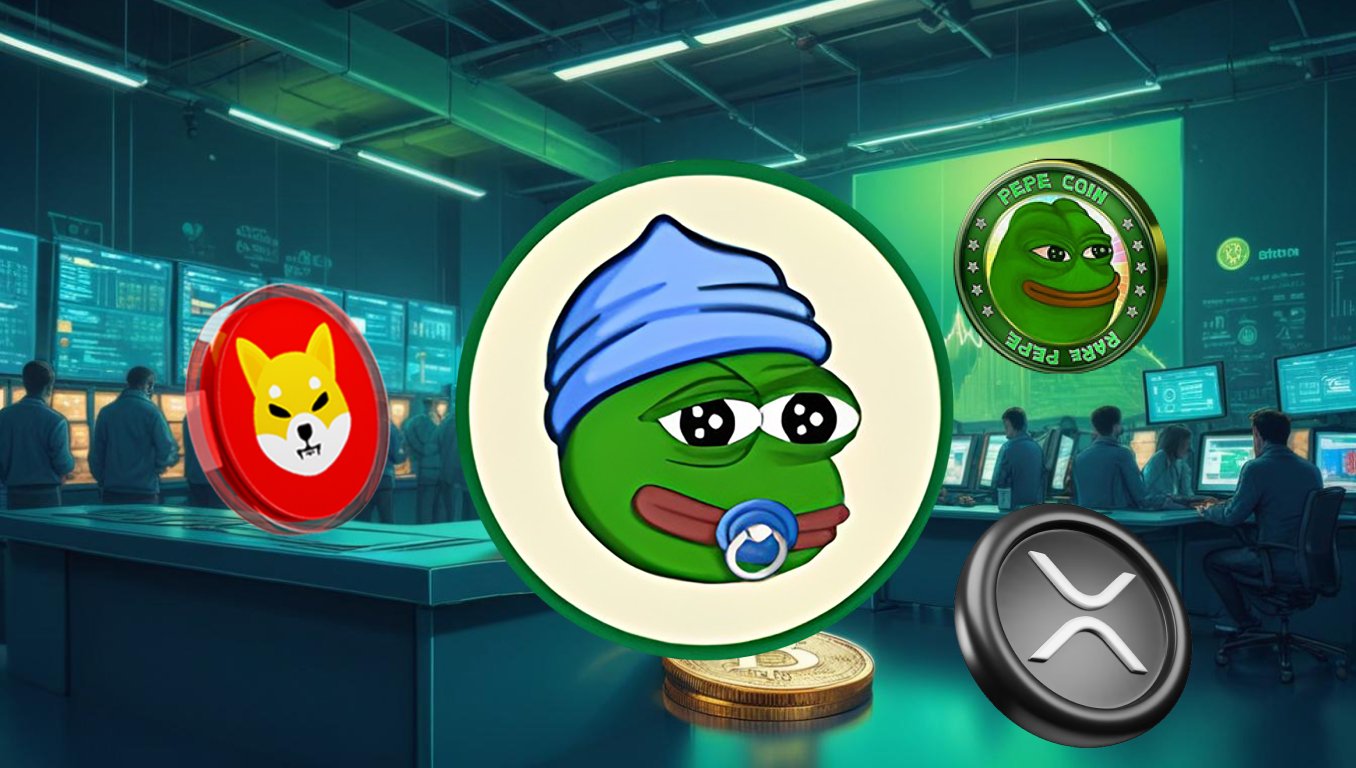
High-ROI Investors Looking for the Next 10,000% Runner Are Buying This Crypto; Not Shiba Inu, Pepe Coin, and XRP

High-ROI Investors Looking for the Next 10,000% Runner Are Buying This Crypto; Not Shiba Inu, Pepe Coin, and XRP

The hunt for the next life-changing crypto is always alive, and this season, the whispers are not about Shiba Inu, Pepe, or XRP. The big chatter is around Little Pepe (LILPEPE), the cheeky meme coin quietly making serious noise in its presale. High ROI investors who usually sniff out the next 10,000% runner early are [...] The post High-ROI Investors Looking for the Next 10,000% Runner Are Buying This Crypto; Not Shiba Inu, Pepe Coin, and XRP appeared first on Blockonomi.

Author: Blockonomi
From Below $0.004 to $4 in Less Than Two Years? This Ethereum Token Will Deliver 1000x Gains By 2027

From Below $0.004 to $4 in Less Than Two Years? This Ethereum Token Will Deliver 1000x Gains By 2027

The post From Below $0.004 to $4 in Less Than Two Years? This Ethereum Token Will Deliver 1000x Gains By 2027 appeared on BitcoinEthereumNews.com. Crypto’s biggest gains often come from under-the-radar projects that combine hype with innovation. Little Pepe (LILPEPE) is an Ethereum token aiming to bring infrastructure and viral energy to the meme coin space. It’s a meme token on Ethereum building its own Layer-2 blockchain designed for memes. No other meme coin project has achieved this feat. Priced under $0.004 in presale, projections suggest it could reach $4 by 2027. This represents a 1000× return.  With presale momentum and credibility already in place, LILPEPE could be poised to explode by 2027.  Little Pepe (LILPEPE): Why This Ethereum Token is More Than Just a Meme Coin Most meme coins live or die by hype alone. Dogecoin (DOGE) thrives on culture but suffers from lack of utility. Similarly, Shiba Inu (SHIB) sparked massive gains but has struggled to sustain momentum. On the other hand, Little Pepe (LILPEPE) is positioning itself differently. It combines meme power with real infrastructure.  Its upcoming Layer 2 will be built exclusively for meme tokens, offering: Ultra-low fees and high speeds for trading and launching new memes. Pepe’s Pump Pad, a launchpad for fair meme projects with locked liquidity and bot protection. Anti-sniper technology that ensures a level playing field during launches. In other words, it’s not just a meme play. It’s building a meme ecosystem. An Ethereum Token with Tokenomics Designed for Growth Part of what makes Little Pepe compelling is its clean tokenomics. The supply is capped at 100 billion LILPEPE. Distribution looks like this: 26.5% presale allocation, giving early buyers direct upside. 30% ecosystem reserves fueling future development and sustainability. 13.5% staking rewards, encouraging holders to stay long-term. 10% marketing, 10% liquidity, and no transaction tax. This balance reduces sell pressure while rewarding community participation. Early Traction and Presale Momentum The presale has already gained serious traction,…

Author: BitcoinEthereumNews
Top 3 Memecoins Set to Outperform the Market by the End of 2025

Top 3 Memecoins Set to Outperform the Market by the End of 2025

The post Top 3 Memecoins Set to Outperform the Market by the End of 2025 appeared on BitcoinEthereumNews.com. The memecoin market has continued to surprise even seasoned crypto investors. Certain coins are emerging as potential market leaders with innovative projects combining humor, utility, and blockchain technology.  Three tokens, namely Little Pepe (LILPEPE), Brett (BRETT), and NotCoin (NOTCOIN), are being closely monitored by analysts because they are expected to perform better than the market by the time the year 2025 comes to a close.   These projects each have a strong community support system and forward-thinking features, both of which have the potential to assist them in increasing their value over the approaching few months. Little Pepe (LILPEPE) Little Pepe (LILPEPE) is the current memecoin ecosystem standout. The project recently concluded stage 11 of its presale at $0.002 per token, and stage 12 is now live at $0.0021, a 10% increase from the previous stage. Stage 13 is expected to launch at $0.0022, reflecting steady built-in price growth for early investors. Those who joined at stage 1 are already up around 110%. When the token officially launches at $0.003, stage 12 buyers could see a potential gain of roughly 42.86%. LILPEPE is more than just a frog meme; it operates on a Layer 2 EVM-compatible chain that’s fast, low-cost, and resistant to sniper bots. The project includes a Pepe Launchpad, designed to seed future meme and NFT projects, while maintaining a fair trading environment with zero transaction tax. A transparent vesting plan reduces the risk of sudden dumps, creating long-term stability for holders. The project has already raised over $22,404,487 during presale, selling more than 14,287,849,916 tokens, and it is officially listed on CoinMarketCap with a CertiK audit completed. Analysts suggest the token could see up to 10,000 percent upside if adoption accelerates post-launch. On top of this, a $777K giveaway is underway, with ten winners set to claim…

Author: BitcoinEthereumNews
50% Workforce Cut for New Model

50% Workforce Cut for New Model

The post 50% Workforce Cut for New Model appeared on BitcoinEthereumNews.com. Sandbox layoffs have reached a critical milestone as the metaverse platform that during the NFT boom raised $93 million from SoftBank undergoes a dramatic transformation by laying off 250 employees — half its workforce — and pivoting to a memecoin launchpad business model. Summary The Sandbox is shifting from a game and metaverse that, at one point, had thousands of users but is now dwindling to hundreds, prominent analysts say. The entity will now shift toward a memecoin launchpad model, not dissimilar from platforms like Pump.fun. Questions remain as to what the slashing of over half its workforce will mean for the Animoca Brands-managed Sandbox. Virtual world pioneer The Sandbox is reportedly planning to lay off more than half of its workforce and replace its co-founders with a new CEO, marking a dramatic shift for the once-prominent metaverse platform. The news, first reported by French journalist Gregor Raymond on August 28, signals what many industry observers view as an inevitable reckoning for a company that has struggled to justify its valuation amid declining interest in virtual worlds and NFT gaming. Founded by Arthur Madrid and Sebastien Borget, The Sandbox emerged as a flagship project during the 2021 NFT boom, promising immersive digital experiences and virtual real estate opportunities. The company has so far not commented on the report, though reaction online has been one of muted expectations for metaverse projects, particularly in the latest cycle. This potential transformation — from metaverse gaming platform to what sources suggest could be a memecoin trading launchpad — would represent one of the most significant strategic pivots in cryptocurrency history. It underscores the broader challenges facing virtual world platforms that once commanded premium valuations but have struggled to maintain user engagement and revenue streams. The development raises questions about whether this marks a broader…

Author: BitcoinEthereumNews
New Solana launchpad Heaven grabs 15% market share, outpaces rivals with ‘God Flywheel’ model

New Solana launchpad Heaven grabs 15% market share, outpaces rivals with ‘God Flywheel’ model

Solana‑based token launchpad Heaven went live on Aug. 15 and has averaged about 4,100 token launches per day.

Author: Coinstats
Top crypto protocols generate $1.2B in revenue after recording 9.3% monthly growth

Top crypto protocols generate $1.2B in revenue after recording 9.3% monthly growth

The post Top crypto protocols generate $1.2B in revenue after recording 9.3% monthly growth appeared on BitcoinEthereumNews.com. The 10 highest-grossing crypto protocols generated $1.2 billion in revenue during the 30 days ending Aug. 28, representing a 9.3% increase from the previous month’s total of $1.1 billion per DefiLlama data. Ethena led the percentage gains with a 243% revenue surge, jumping from $9.46 million to $32.48 million, as its synthetic dollar USDe captured market share from traditional stablecoins. The protocol’s revenue expansion of $23 million represented the second-largest absolute increase among tracked applications. Pump.fun posted the second-highest percentage growth at 79%, with revenue climbing from $22.55 million to $40.39 million. The Solana-based memecoin launchpad benefited from continued speculation in newly created tokens, generating an additional $17.84 million in monthly fees. Stablecoin dominance continues Tether maintained market leadership despite modest 2.9% growth, with revenue rising from $614.79 million to $632.91 million. The stablecoin issuer’s $18.12 million increase represented the largest absolute gain among protocols, reinforcing its position as the sector’s primary revenue generator. Circle ranked second with revenue growing 4.5% from $197.59 million to $206.4 million, adding $8.81 million in monthly fees. Combined, the two stablecoin issuers accounted for 70% of total crypto protocol revenue during the tracking period. Hyperliquid recorded substantial growth with revenue expanding 25.9% from $82.86 million to $104.3 million. The decentralized perpetual exchange captured an additional $21.43 million as trading volumes increased across its platform. Mixed performance across sectors Sky Protocol achieved 77.5% revenue growth, rising from $10.1 million to $17.93 million. Jupiter reported 23.5% growth, with revenue increasing from $21.95 million to $27.1 million, driven by activity in the Solana ecosystem. Tron recorded moderate gains of 11.6%, with revenue climbing from $56.21 million to $62.73 million. Phantom wallet generated $22.82 million, up 9.5% from $20.84 million in the previous period. Axiom provided the sole negative performance among top protocols, with revenue declining 13.9% from…

Author: BitcoinEthereumNews
Cheap Below $0.003, This Meme Coin Could be the Next 20,000% Runner After Pepe Coin (PEPE)

Cheap Below $0.003, This Meme Coin Could be the Next 20,000% Runner After Pepe Coin (PEPE)

From Dogecoin’s early dominance to Shiba Inu’s community-driven surge and Pepe’s explosive run, history shows that meme tokens can deliver life-changing returns in a short span. Attention is shifting toward a new contender trading under $0.003; Little Pepe (LILPEPE). With its nearly sold-out presale, unique Layer 2 design, and rapid rise in community interest, LILPEPE […]

Author: Cryptopolitan
Top coins face rival memecoin offering massive growth potential

Top coins face rival memecoin offering massive growth potential

As DOGE, SHIB, PEPE cool, Little Pepe raises $22.3m in presale, with analysts eyeing massive upside. #partnercontent

Author: Crypto.news