Lending

Lending protocols form the backbone of the decentralized money market, allowing users to lend or borrow digital assets without intermediaries. Using smart contracts, platforms like Aave and Morpho automate interest rates based on supply and demand while requiring over-collateralization for security. The 2026 lending landscape features advanced permissionless vaults and institutional-grade credit lines. This tag covers the evolution of capital efficiency, liquidations, and the integration of diverse collateral types, including LSTs and tokenized RWAs.

14015 Articles
Created: 2026/02/02 18:52
Updated: 2026/02/02 18:52
SoFi Bank taps Bitcoin Lightning for cross-border payments via Lightspark

SoFi Bank taps Bitcoin Lightning for cross-border payments via Lightspark

The post SoFi Bank taps Bitcoin Lightning for cross-border payments via Lightspark appeared on BitcoinEthereumNews.com. SoFi Bank will use Bitcoin’s Lightning Network to launch low-cost international money transfers, beginning with Mexico later this year. Summary SoFi Bank will leverage Bitcoin’s Lightning Network to launch a global remittance service. The service uses Lightspark’s Universal Money Address, which lets users send dollars abroad with real-time Bitcoin conversion. As part of its partnership with payments infrastructure provider Lightspark, announced on Aug. 19, SoFi Bank will offer near-instant cross-border payments that convert U.S. dollars to Bitcoin in real-time and transmit them via Lightning rails.  The funds are then automatically converted into the recipient’s local currency and deposited into their bank account. This rollout will mark the first time a U.S. bank integrates blockchain-based remittance capabilities directly into its core banking app. The new feature will let SoFi’s 11.7 million members send money abroad at a fraction of the cost of traditional remittance channels. All transactions will take place within the SoFi app, with no need for third-party services.  The company says it expects fees to fall below the national average and that all exchange rates and costs will be disclosed upfront to ensure transparency. SoFi CEO Anthony Noto said the new service aims to make a “meaningful improvement” for customers who regularly send money abroad. “By embedding this directly into SoFi’s app, we’re unlocking the value of blockchain technology to give members faster, smarter, and more inclusive access to their money,” he said. SoFi Bank and the Bitcoin Lightning Partner The technical core of SoFi’s new service is Lightspark’s Universal Money Address (UMA), which allows users to send and receive funds using simple, email-like identifiers. Behind the scenes, UMA routes payments through Bitcoin’s Lightning Network—a Layer 2 protocol designed to handle small transactions rapidly and cheaply by operating off-chain. When a user initiates a transfer, the system converts U.S.…

Author: BitcoinEthereumNews
Best Crypto to Buy in Late 2025: Layer Brett Tops Solana (SOL) and Ripple (XRP) With Projected 200x Gains

Best Crypto to Buy in Late 2025: Layer Brett Tops Solana (SOL) and Ripple (XRP) With Projected 200x Gains

The post Best Crypto to Buy in Late 2025: Layer Brett Tops Solana (SOL) and Ripple (XRP) With Projected 200x Gains appeared on BitcoinEthereumNews.com. Looking for the best crypto to buy now? The answer might not be a legacy altcoin but a brand new Ethereum Layer 2 meme token. Experts are already projecting that $LBRETT could explode by 200x, positioning it as the next big crypto.  While established networks like Solana and Ripple have captured headlines in the past, a new player in the crypto presale space is poised to take their place. Layer Brett isn’t just a community-driven project; it’s a technological leap forward, blending viral culture with real blockchain utility. Solana’s Past Woes Put Layer Brett in a Different League For a while, Solana was seen as the “Ethereum killer,” but its reign has been marked by repeated outages and network instability. A blockchain that goes down isn’t a long-term investment, no matter how fast it claims to be. This is where Layer Brett completely changes the game.  Unlike Solana, which is running on a fairly congested network, Layer Brett has an Ethereum Layer 2 core, gaining Ethereum security and decentralization. At the same time it can escape the slow speeds and high gas fees that plague the main network. Its design allows for lightning-fast transactions, making it a truly scalable alternative to networks like Solana. Why Layer Brett is Poised to Overtake Ripple Long-time crypto investors are familiar with Ripple, a project that has been mired in regulatory uncertainty for years. The long-running SEC legal battle has put a ceiling on Ripple’s growth potential, limiting its ability to attract new users and compete with modern, decentralized projects.  This is where the true promise of $LBRETT shines. Unlike Ripple, Layer Brett is completely decentralized, self-custodial, and operates with no KYC. The community has full control. Because Layer Brett has a much smaller market cap than Ripple, it has far greater opportunity for…

Author: BitcoinEthereumNews
Basel Crypto Rules: Why Financial Giants Demand a Crucial Pause on 2026 Standards

Basel Crypto Rules: Why Financial Giants Demand a Crucial Pause on 2026 Standards

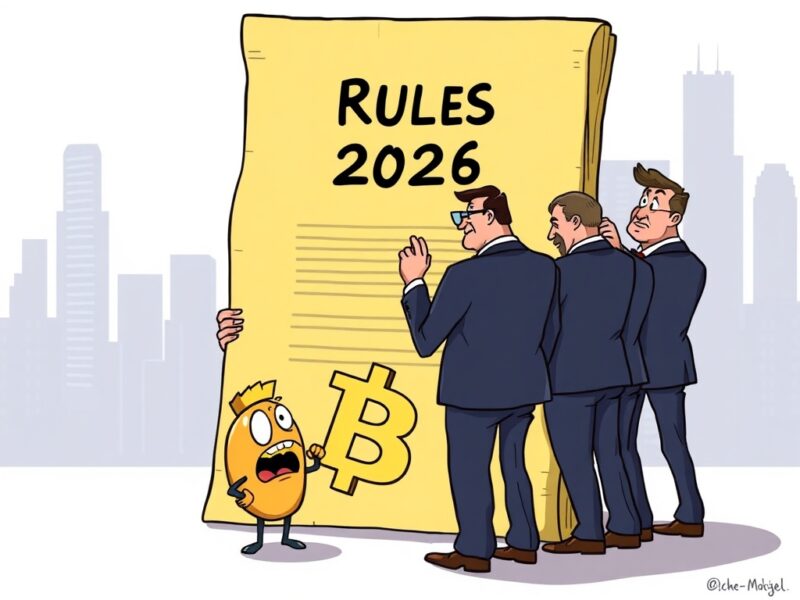
BitcoinWorld Basel Crypto Rules: Why Financial Giants Demand a Crucial Pause on 2026 Standards The global financial landscape constantly evolves, and with the rise of digital assets, regulators face the complex task of integrating cryptocurrencies into traditional banking frameworks. A significant development has emerged as major financial industry associations are now urging the Basel Committee on Banking Supervision (BCBS) to reconsider its impending 2026 Basel crypto rules. This push highlights growing concerns about the feasibility and impact of these stringent regulations on the evolving crypto market. Understanding the Proposed Basel Crypto Rules What exactly are these Basel crypto rules that have the financial world buzzing? The Basel Committee, a global standard-setter for banking regulation, developed a framework to manage banks’ exposure to crypto assets. These rules, initially drafted in 2022, assign significant risk weights to cryptocurrencies held by banks. High-Risk Classification: Under the current framework, popular cryptocurrencies like Bitcoin (BTC) and Ethereum (ETH) carry a 100% risk weight. This means banks holding these assets must set aside capital equivalent to their full value. Extreme Capital Charges: For many other tokens, the rules impose an even more severe 1,250% charge. To put this in perspective, this is substantially higher than capital requirements for traditional assets such as corporate bonds or equities. This extreme charge essentially makes it economically unviable for banks to hold these types of crypto assets. These standards were conceived in a period of market turbulence, specifically following major collapses like the Terra token ecosystem and the FTX crypto exchange. Regulators aimed to protect the financial system from similar shocks by imposing strict capital requirements. Why Are Financial Groups Urging a Pause on Basel Crypto Rules? Eight prominent financial industry associations, including powerful groups like the Institute of International Finance (IIF) and the Global Financial Markets Association (GFMA), recently sent a letter to the BCBS. Their core message was clear: “temporarily pause” the implementation of these Basel crypto rules set for January 2026. Their primary argument centers on a fundamental shift in market conditions. They contend that the policy environment in 2025 is “fundamentally different” from 2022, when the rules were initially drafted. Here’s why they believe a pause is necessary: Market Evolution: The crypto market has matured significantly since the collapses of Terra and FTX. There’s greater clarity, improved risk management practices, and evolving regulatory approaches in various jurisdictions. Innovation Constraint: The current punitive capital charges could stifle innovation within traditional finance by discouraging banks from engaging with digital assets. This might push crypto activities outside regulated banking sectors, potentially increasing systemic risk rather than reducing it. Global Consistency: Financial groups seek a more harmonized global approach. A pause allows for further dialogue and refinement, ensuring the rules align better with emerging national regulations and foster a level playing field. The associations emphasize that a pause would allow for a more thorough review and adjustment of the framework to reflect the current state of the digital asset market, ensuring that the rules are both effective and practical. What Are the Potential Impacts of These Basel Crypto Rules? The implications of the current Basel crypto rules are far-reaching for banks and the broader financial ecosystem. If implemented as planned, these rules could significantly alter how traditional financial institutions interact with cryptocurrencies. Limited Bank Participation: The high capital charges could deter banks from offering crypto-related services, such as custody, trading, or lending, to their clients. This might mean fewer regulated pathways for institutional crypto adoption. Competitive Disadvantage: Banks operating under these strict rules might find themselves at a disadvantage compared to less regulated entities or those in jurisdictions with more lenient frameworks. Impact on Crypto Market: While the rules aim to de-risk banks, they could inadvertently slow down the integration of digital assets into the mainstream financial system, potentially hindering the market’s overall growth and maturation within regulated channels. The industry groups are not against regulation, but they advocate for a framework that is proportionate to the actual risks and does not unduly penalize responsible engagement with digital assets. The Road Ahead: Revisiting Basel Crypto Rules The call for a pause puts the ball back in the Basel Committee’s court. What might happen next for these crucial Basel crypto rules? The BCBS will likely consider the industry’s concerns, weighing the need for financial stability against fostering innovation and ensuring a practical regulatory environment. Dialogue between regulators and the financial industry is crucial to finding a balanced approach. This situation underscores the dynamic nature of cryptocurrency regulation. As the digital asset space continues to evolve, regulatory frameworks must also adapt to ensure they remain relevant, effective, and supportive of responsible innovation. The industry’s plea for a pause is a clear signal that current conditions warrant a fresh look at the rules governing banks’ crypto exposures. In conclusion, the unified call from major financial trade groups to pause the 2026 Basel crypto rules highlights a critical juncture in cryptocurrency regulation. Their argument—that market conditions have fundamentally changed since the rules were drafted—underscores the need for adaptive and proportionate frameworks. The outcome of this appeal will significantly influence how traditional banks engage with digital assets and shape the future integration of crypto into the global financial system. Frequently Asked Questions (FAQs) About Basel Crypto Rules Q1: What are the Basel Committee’s 2026 crypto rules? A1: These rules, drafted by the Basel Committee on Banking Supervision (BCBS), set capital requirements for banks’ exposure to cryptocurrencies. They assign high risk weights (e.g., 100% for BTC/ETH, 1,250% for many other tokens) to ensure financial stability. Q2: Why are financial groups asking for a pause on the Basel crypto rules? A2: Major financial industry associations argue that market conditions have fundamentally changed since the rules were drafted in 2022. They believe the current framework is too punitive, could stifle innovation, and needs reassessment to reflect the evolving digital asset landscape. Q3: Which organizations signed the letter to the BCBS? A3: Eight major financial industry associations sent the letter, including prominent groups like the Institute of International Finance (IIF) and the Global Financial Markets Association (GFMA). Q4: How do these rules impact banks holding crypto assets? A4: The stringent capital charges make it economically challenging for banks to hold crypto assets or offer related services. This could limit bank participation in the crypto market and potentially put them at a competitive disadvantage. Q5: What does a ‘1,250% charge’ mean for crypto assets? A5: A 1,250% charge means banks must hold capital equal to 12.5 times the value of the crypto asset. This makes it extremely expensive and often unfeasible for banks to hold such assets, effectively acting as a deterrent. Q6: Will the Basel Committee likely pause the rules? A6: While the BCBS has not yet formally responded, they will likely consider the industry’s concerns. The outcome will depend on ongoing dialogue and their assessment of the evolving market and regulatory environment. If you found this article insightful, consider sharing it with your network on social media. Your shares help spread awareness about crucial developments in crypto regulation and foster a more informed community. To learn more about the latest crypto market trends, explore our article on key developments shaping digital asset institutional adoption. This post Basel Crypto Rules: Why Financial Giants Demand a Crucial Pause on 2026 Standards first appeared on BitcoinWorld and is written by Editorial Team

Author: Coinstats
Radiant Capital hacker doubles $53M stash via ETH trading

Radiant Capital hacker doubles $53M stash via ETH trading

The post Radiant Capital hacker doubles $53M stash via ETH trading appeared on BitcoinEthereumNews.com. The hacker behind last year’s $53 million Radiant Capital exploit has nearly doubled the value of the stolen funds through a well-timed Ethereum trading strategy. Summary The Radiant Capital hacker increased stolen funds from $53M to $94M through ETH and DAI trading. The October 2024 attack exploited Radiant’s multisig wallet using macOS malware. Attribution points to North Korea-linked AppleJeus, with little chance of recovery. According to on-chain analyst EmberCN’s Aug. 19 X post, the hacker had earlier sold 9,631 Ethereum (ETH) at an average of $4,562 for 43.9 million Dai (DAI), only to buy back 2,109.5 ETH for $8.64 million DAI once prices pulled back to $4,096. The wallet now holds 14,436 ETH and 35.29 million DAI, a portfolio worth $94.63 million. This represents a gain of more than $41 million over the initial value of the stolen funds. Blockchain analytics firm Lookonchain noted that the decision to keep most of the assets in ETH during its rally played a major role in the increased balance. 啊,好家伙,这 Radiant Capital 黑客竟然玩起波段来了😂:他不是在一周前以 $4,562 的均价卖出了 9,631 枚 ETH 换成 4393.7 万 DAI 嘛。这几天 ETH 回调了,他在过去 1 小时里又用 $864 万 DAI 以 $4,096 的价格重新买回了 2109.5 枚 ETH… 现在 Radiant Capital 黑客持有 14,436 枚 ETH+3529 万… https://t.co/hO4MbNPrjd pic.twitter.com/ihLYhpmNAV — 余烬 (@EmberCN) August 20, 2025 From $53 million heist to $94 million stash The October 2024 breach of Radiant Capital, a multi-chain decentralized finance protocol, was one of the most damaging attacks of the year. By compromising the multisignature wallet of its core team through a macOS-specific malware called INLETDRIFT, the attacker siphoned tokens from lending pools on Arbitrum (ARB) and BNB (BNB) Chain.  At the time, the stolen assets were quickly converted into 21,957 ETH, then valued at about $53 million when Ethereum was trading near $2,500. Rather than liquidating the holdings, the hacker held…

Author: BitcoinEthereumNews
Using Lombard and Aave Combo For More Katana Krates

Using Lombard and Aave Combo For More Katana Krates

I am not that smart to combine DeFi protocols like this, so all the credit for this experiment goes to my fren’ Travis and his big crypto…Continue reading on Coinmonks »

Author: Medium
Radiant Capital hacker almost doubles stolen funds through ETH trading

Radiant Capital hacker almost doubles stolen funds through ETH trading

Radiant Capital hacker grows stolen assets to $94M through DAI swaps and ETH trading strategy.

Author: Crypto.news
Valantis DEX acquires stHYPE as Hyperliquid staking heats up

Valantis DEX acquires stHYPE as Hyperliquid staking heats up

Valantis acquires stHYPE to expand Hyperliquid’s liquid staking market, aiming for deeper liquidity, modular yield, and stronger DeFi integration.

Author: Crypto.news
South Korea Blocks Lending Services

South Korea Blocks Lending Services

The post South Korea Blocks Lending Services appeared on BitcoinEthereumNews.com. Crypto Platforms Hit Hard: South Korea Blocks Lending Services Sign Up for Our Newsletter! For updates and exclusive offers enter your email. Christian, a journalist and editor with leadership roles in Philippine and Canadian media, is fueled by his love for writing and cryptocurrency. Off-screen, he’s a cook and cinephile who’s constantly intrigued by the size of the universe. This website uses cookies. By continuing to use this website you are giving consent to cookies being used. Visit our Privacy Center or Cookie Policy. I Agree Source: https://bitcoinist.com/crypto-platforms-hit-hard-south-korea-blocks-lending-services/

Author: BitcoinEthereumNews
How to scientifically evaluate the quality of an altcoin?

How to scientifically evaluate the quality of an altcoin?

By Marie Poteriaieva Source: Cointelegraph Compiled by: Shan Ouba, Golden Finance Key Takeaways Web3 daily active users: Remain at 24 million in the second quarter of 2025, but the composition

Author: PANews
Ethereum Price Prediction: ETH Poised for Gains, But This $0.035 Altcoin Could Lead the Next Bull Surge

Ethereum Price Prediction: ETH Poised for Gains, But This $0.035 Altcoin Could Lead the Next Bull Surge

Ethereum continues to capture headlines as market watchers analyze whether ETH is positioned for a fresh upswing, but all eyes may soon shift to a rising coin in the altcoin market. Mutuum Finance (MUTM), a rapidly emerging $0.035 altcoin, is drawing attention for its innovative DeFi protocols and growing adoption, signaling potential influence in the […]

Author: Cryptopolitan