Liquidation

Liquidation occurs when a trader’s collateral is no longer sufficient to cover their leveraged position’s losses, triggering an automated forced closure by the exchange's liquidation engine. It is a critical risk-management mechanism that ensures the solvency of lending protocols and derivative platforms. In 2026, the focus has moved toward MEV-resistant liquidation models that protect users from predatory "cascades." This tag provides essential information on maintenance margins, health factors, and how to avoid liquidation in high-volatility environments.

14327 Articles
Created: 2026/02/02 18:52
Updated: 2026/02/02 18:52
Bitcoin (BTC) Price: Flash Crash Tests $109,000 Support Level as Retail Investors Exit

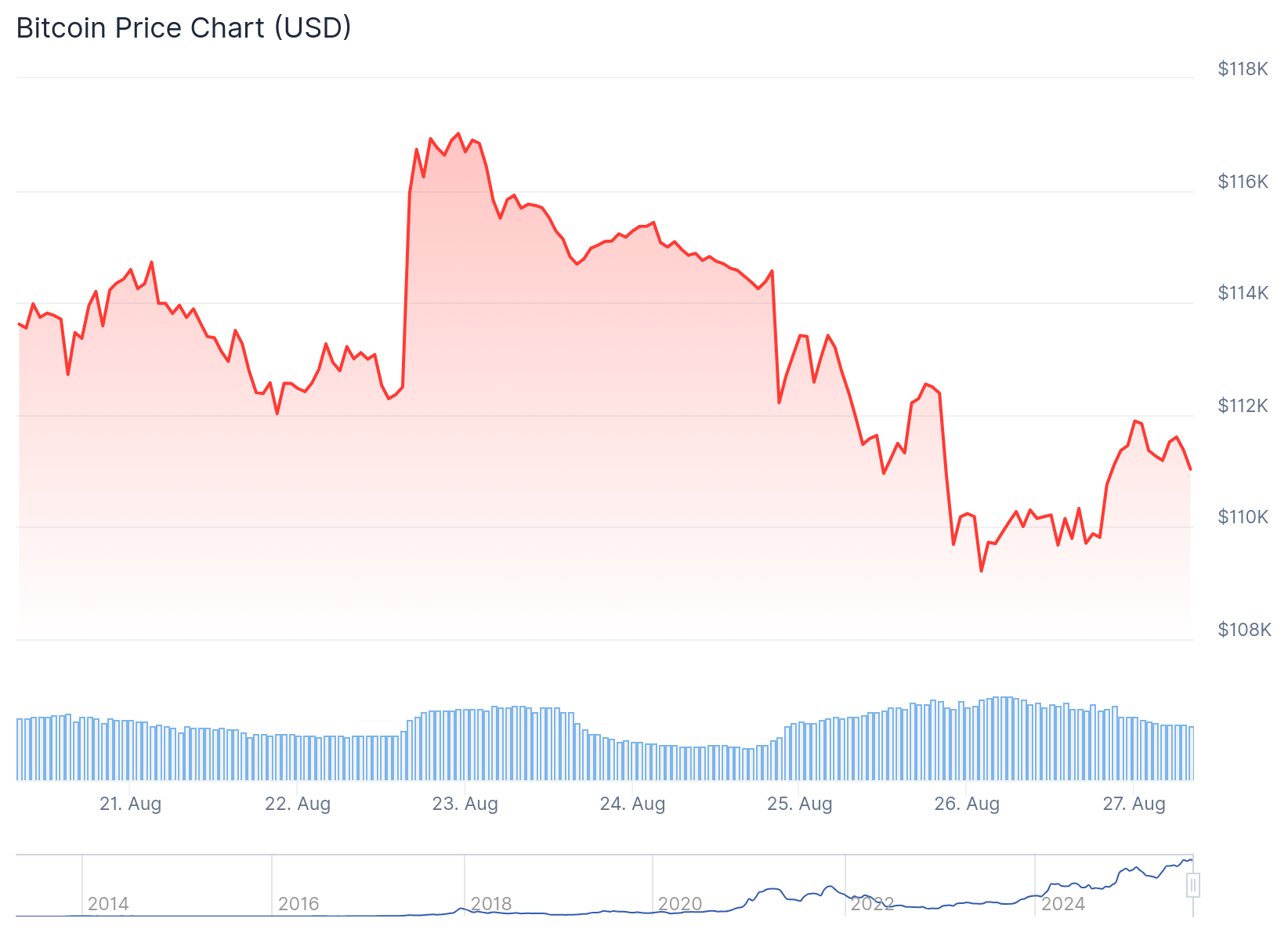
Bitcoin (BTC) Price: Flash Crash Tests $109,000 Support Level as Retail Investors Exit

TLDR Bitcoin’s flash crash on August 24th cleared out overleveraged positions with 18% long liquidation dominance, the highest in months Newer investors holding coins less than a month face 3.5% unrealized losses while 1-6 month holders remain profitable at 4.5% gains Key support zone identified at $100,000-$107,000 where Short-Term Holder Realized Price meets the 200-day [...] The post Bitcoin (BTC) Price: Flash Crash Tests $109,000 Support Level as Retail Investors Exit appeared first on CoinCentral.

Author: Coincentral
Bitcoin Traders Line Up BTC Price Targets Around $100,000

Bitcoin Traders Line Up BTC Price Targets Around $100,000

The post Bitcoin Traders Line Up BTC Price Targets Around $100,000 appeared on BitcoinEthereumNews.com. Bitcoin (BTC) is teasing a breakdown below old all-time highs at $109,300; where will BTC price action head next? Crypto traders are ready with BTC price targets as bulls nurse a 13% pullback from all-time highs. Bitcoin’s key trendlines in danger Bitcoin’s latest dive took BTC/USD below previous all-time highs first seen in January 2025. That psychological level now hangs in the balance, but is not the only nearby level that observers are concerned about. Various simple (SMA) and exponential (EMA) moving averages risk getting flipped from support to resistance as price struggles to halt its decline. “BTC has broken below the 100 EMA on the daily chart. That’s not a good sign and could open the door for a deeper correction toward $103K,” popular trader Cryptorphic warned in an X post Tuesday.  “Historically, every drop below this EMA has led to a short-term pullback. I’m watching closely and hoping Bitcoin reclaims the level soon to keep the uptrend intact.” BTC/USDT one-day chart. Source: Cryptorphic/X Data from Cointelegraph Markets Pro and TradingView shows the 100-day EMA at $110,820. The 200-day SMA, meanwhile — a classic bull market support line — sits lower at just under $101,000. The last time that BTC/USD traded below that trend line was in mid-April. BTC/USD one-hour chart with 100-EMA, 200-day SMA. Source: Cointelegraph/TradingView Speculators tipped as BTC price safety net As Cointelegraph continues to report, some market participants have much lower BTC price targets in mind. These include a retest of the $100,000 mark and even a drop back into five-figure territory. This is thanks to a combination of weakening onchain metrics such as trade volume and relative strength index (RSI) divergences. BTC/USD four-hour chart with RSI divergence. Source: Cointelegraph/TradingView For Axel Adler Jr., a contributor to onchain analytics platform CryptoQuant, Bitcoin’s speculative investor base may be what…

Author: BitcoinEthereumNews
Japan Reveals 2026 Tax Reform, Including Crypto Measures

Japan Reveals 2026 Tax Reform, Including Crypto Measures

The post Japan Reveals 2026 Tax Reform, Including Crypto Measures appeared on BitcoinEthereumNews.com. Japan’s Financial Services Agency (FSA) has disclosed the outline of its 2026 tax reform request, which includes proposals to revise cryptocurrency taxation and expand the Nippon Individual Savings Account (NISA) framework. According to Kyodo News, the FSA’s reform request includes reviewing tax rules for cryptocurrency trading, such as Bitcoin. FSA Proposes Revisions to Cryptocurrency Taxation Individual crypto gains are subject to comprehensive taxation, which combines profits with salary income and potentially reaches a maximum tax rate of 55%. The FSA and industry associations are advocating for the introduction of separate self-assessed taxation, or “declaration-based capital gains tax,” which would apply a flat rate of approximately 20%, similar to equities. This change aims to create a fairer tax environment and encourage broader participation in digital asset trading. Another key proposal is the introduction of loss carry-forward deductions for crypto trading. Current rules prevent investors from offsetting losses against future gains, reducing risk management options. Industry groups are calling for a three-year carry-forward system analogous to stock market rules. This would reduce investment risk and potentially lower the entry barriers for retail participants. The FSA plans to submit its request to the Ministry of Finance by the end of August and will engage in discussions with the ruling coalition through year-end. The government aims to pass related legislation during the 2026 regular Diet session. Japan’s Financial Services Agency NISA Expansion Could Indirectly Support Crypto Investment In addition to crypto taxation, the reform request includes proposals to expand NISA eligibility to all generations, including minors and seniors. Although NISA does not currently cover cryptocurrencies, investors could use broader tax-advantaged schemes to support crypto trading indirectly. NISA allows households to invest in stocks and funds with flexible buy-sell and liquidation options. Investors can secure cash for potential crypto trading through these investments. The reforms…

Author: BitcoinEthereumNews
Unpacking Massive Crypto Liquidations: What 24 Hours Revealed

Unpacking Massive Crypto Liquidations: What 24 Hours Revealed

The post Unpacking Massive Crypto Liquidations: What 24 Hours Revealed appeared on BitcoinEthereumNews.com. Unpacking Massive Crypto Liquidations: What 24 Hours Revealed Skip to content Home Crypto News Unpacking Massive Crypto Liquidations: What 24 Hours Revealed Source: https://bitcoinworld.co.in/crypto-liquidations-market-impact/

Author: BitcoinEthereumNews
Crypto Market Wipeout: Nearly 180K Traders Liquidated After Bitcoin’s Drop

Crypto Market Wipeout: Nearly 180K Traders Liquidated After Bitcoin’s Drop

The crypto market faced a sharp correction as nearly $813 million worth of positions were liquidated within 24 hours, with Bitcoin [BTC] at the center of the storm. At press time, BTC had slipped below the $110,000 mark, sparking questions about whether the liquidation wave was purely a reaction to price action or if it […]

Author: Coinstats
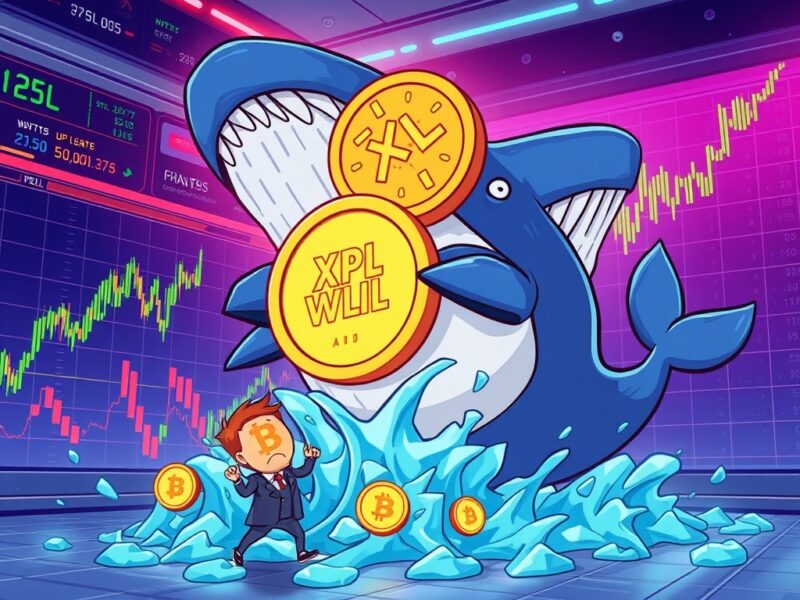
A user lost $4.59 million due to the liquidation of their short position in XPL due to manipulation by a whale.

A user lost $4.59 million due to the liquidation of their short position in XPL due to manipulation by a whale.

PANews reported on August 27 that according to Lookonchain monitoring, due to the manipulation of XPL by a whale on Hyperliquid, the victim 0xC2Cb's XPL short position was completely liquidated, resulting in a loss of US$4.59 million.

Author: PANews
Was It Justin? XPL Soars 200% on Hyperliquid as Whale Wipes Out Order Book

Was It Justin? XPL Soars 200% on Hyperliquid as Whale Wipes Out Order Book

The post Was It Justin? XPL Soars 200% on Hyperliquid as Whale Wipes Out Order Book appeared on BitcoinEthereumNews.com. A large wallet rocked the Hyperliquid market when it deposited 16 million USDC and opened millions of XPL long positions in just a few minutes. This move instantly “swept clean” the order book, liquidating all short positions and driving XPL’s price to soar over 200% from the $0.58 range to a peak of $1.80. Liquidity Shock According to data from Lookonchain, this wallet partially closed its position within less than a minute and secured a $16 million profit. Some traders speculate that this wallet belongs to Justin Sun, the mastermind behind the Tron (TRX) network. “Justin Sun just locked in $16M profit in under 60 seconds. He longed millions of $XPL, nuking the entire order book and wiping traders instantly. Sent $XPL soaring to $1.80 (+200% in 2 minutes). And he’s STILL holding 15.2M $XPL ($10.2M) long. Easily one of the craziest liquidation cascades ever seen on Hyperliquid,” an X user commented. XPL price volatility. Source: MLM on X Not only did whales benefit, but Hyperliquid’s HLP vault also earned approximately $47,000 from this volatility. Despite this, the vault suffered a nearly $12 million loss in a similar event. This reflects the dual-risk nature of liquidity providers: they can earn fees while facing significant losses when volatility strikes. Before XPL, Hyperliquid witnessed a similar event with the JELLY token. At that time, unusual price swings caused the HLP vault to incur a nearly $12 million loss. This loss occurred because the vault was caught up in liquidity provision amid an order book “wipeout.” HLPs earned approximately $47,000 during XPL’s volatility. Source: Hyperliquid HyperLiquid responded to the JELLY squeeze by refunding affected traders and implementing stricter security measures to prevent future incidents. The commonality lies in both cases originating from a mighty whale move in a thinly liquidated market, triggering widespread…

Author: BitcoinEthereumNews
Crypto Market Sees About $700 Million Wipeout as Bitcoin Price Falls to $110,000

Crypto Market Sees About $700 Million Wipeout as Bitcoin Price Falls to $110,000

In what feels like the longest day in Bitcoin history since the token started making significant momentum, the Bitcoin price dropped by $4,000. According to the details shared by on-chain analysts, a whale that holds 152,874 sold about 24,000 Bitcoin of their total Bitcoin balance. When the transaction was made, the sell-off was worth about […]

Author: Tronweekly
Delio Rehabilitation: Shocking New Bid Despite Bankruptcy Ruling

Delio Rehabilitation: Shocking New Bid Despite Bankruptcy Ruling

BitcoinWorld Delio Rehabilitation: Shocking New Bid Despite Bankruptcy Ruling The South Korean crypto space is buzzing with a truly shocking development: Delio rehabilitation efforts are back in the spotlight. Despite a clear bankruptcy ruling from the Seoul Bankruptcy Court in November 2024, the crypto deposit platform Delio has once again filed for corporate rehabilitation. This marks its third attempt, following two previous dismissals, as reported by Digital Asset. This latest move adds another layer of complexity to an already tumultuous situation for the company and its many creditors, creating significant uncertainty in the market. What is This Delio Rehabilitation Bid All About? Delio, a prominent South Korean crypto deposit platform, currently finds itself in a challenging legal battle. Corporate rehabilitation, in essence, is a legal process designed to help financially distressed companies restructure their debts and operations. The primary goal is to avoid outright liquidation, aiming to give the company a chance to recover and continue operating. Ultimately, this process seeks to protect stakeholder interests by finding a path to viability. However, the current filing for Delio rehabilitation is particularly noteworthy because it comes after the Seoul Bankruptcy Court had already declared the company bankrupt. This declaration initiated the process of liquidating Delio’s assets, meaning the court was actively preparing to sell off what the company owned to distribute funds among those it owed money to. Therefore, this new rehabilitation application directly challenges the ongoing liquidation process, making it a rare and complex legal maneuver. A Persistent Fight: Why Another Delio Rehabilitation Attempt? One might reasonably wonder why Delio would pursue rehabilitation after a bankruptcy declaration. Typically, bankruptcy signifies the end of a company’s operations, leading directly to asset sales. Rehabilitation, on the other hand, offers a potential lifeline. Delio’s management likely believes they can still salvage the company, perhaps by proposing a viable repayment plan or a significant restructuring of its business model. They aim to convince the court that rehabilitation offers a better outcome for creditors than a forced liquidation, which can often result in lower returns for those owed money. This persistent effort highlights the company’s determination, or perhaps desperation, to regain control of its destiny. The legal system does allow for such appeals and filings, even after initial rulings. However, each dismissal and subsequent filing adds to the legal costs and prolongs the uncertainty for all parties involved in the ongoing Delio rehabilitation saga. What Does This Mean for Delio’s Creditors? For Delio’s creditors, this latest filing introduces even more ambiguity and potential delays. They have been patiently waiting for the distribution of assets following the initial bankruptcy ruling. The new rehabilitation application could potentially pause or significantly delay the liquidation process, which means a longer wait for any potential recovery of their funds. This situation undoubtedly causes considerable frustration and financial strain. Creditors will now closely watch how the court handles this third application for Delio rehabilitation. If the court accepts the filing, it would shift the focus from selling assets to evaluating a detailed restructuring plan. Conversely, if it is dismissed again, the liquidation process would likely resume with renewed momentum. This back-and-forth creates significant stress and financial uncertainty for individuals and institutions who entrusted their crypto assets to Delio. Navigating the Complexities of Crypto Platform Failures The situation with Delio is a stark reminder of the inherent risks and regulatory challenges within the nascent cryptocurrency industry. Unlike traditional financial institutions, crypto platforms often operate in a less defined legal landscape, especially concerning insolvency and investor protection. The repeated attempts at Delio rehabilitation underscore the difficulties in resolving such complex cases within existing legal frameworks. This ongoing legal drama also sends a critical signal to other crypto firms and regulators in South Korea and beyond. It emphasizes the urgent need for clearer guidelines and robust frameworks to manage the collapse of digital asset platforms effectively. Furthermore, it highlights the paramount importance of due diligence for users when choosing where to deposit their valuable crypto assets. Transparency and strong regulatory oversight are crucial for building trust and ensuring stability in this rapidly evolving sector. In conclusion, Delio’s latest filing for corporate rehabilitation, despite a prior bankruptcy declaration, represents a critical and unexpected turn in its legal battle. This persistent pursuit of Delio rehabilitation creates further uncertainty for its creditors and poses significant questions about the future of the platform. The coming weeks will be crucial as the Seoul Bankruptcy Court reviews this third application, determining the next chapter in this complex crypto insolvency case. Stay tuned for updates on this unfolding story, as it holds important lessons for the broader digital asset ecosystem. Frequently Asked Questions (FAQs) What is corporate rehabilitation? Corporate rehabilitation is a legal process that allows financially distressed companies to restructure their debts and operations to avoid liquidation, aiming to recover and continue business. Why is Delio filing for rehabilitation after being declared bankrupt? Delio is likely seeking to convince the court that a restructuring plan could offer a better outcome for creditors than liquidation, giving the company a chance to survive despite the previous bankruptcy ruling. How does this affect Delio’s creditors? This new filing could potentially delay the liquidation process, meaning creditors might have to wait longer to recover any of their funds. It adds uncertainty to their claims. What was the initial bankruptcy ruling about? The Seoul Bankruptcy Court declared Delio bankrupt in November 2024, initiating the process of liquidating the company’s assets to distribute among its creditors. What happens if the court dismisses this third application for Delio rehabilitation? If the court dismisses the application, the liquidation process would likely resume with renewed focus, moving forward with the sale of Delio’s assets to repay creditors. What are the broader implications for the crypto industry? This case highlights the need for clearer regulatory frameworks for crypto platform insolvency and investor protection, emphasizing the risks and complexities within the digital asset sector. Did you find this update on Delio’s ongoing legal battle insightful? Share this article with your network on social media to keep others informed about the evolving landscape of crypto regulations and platform stability! To learn more about the latest crypto market trends, explore our article on key developments shaping crypto regulations and investor protection. This post Delio Rehabilitation: Shocking New Bid Despite Bankruptcy Ruling first appeared on BitcoinWorld and is written by Editorial Team

Author: Coinstats
Hyperliquid Short Squeeze: Explosive 200% Surge Creates Million-Dollar Opportunity

Hyperliquid Short Squeeze: Explosive 200% Surge Creates Million-Dollar Opportunity

BitcoinWorld Hyperliquid Short Squeeze: Explosive 200% Surge Creates Million-Dollar Opportunity The cryptocurrency world is no stranger to dramatic market movements, but recent events on Hyperliquid have truly captivated traders. Imagine a scenario where two tokens, XPL and WLFI, suddenly skyrocket over 200% in mere minutes. This wasn’t just a random pump; it was the direct result of a massive Hyperliquid short squeeze, an event that saw a single whale address trigger an unprecedented wave of liquidations and multi-million dollar profits. Understanding the Hyperliquid Short Squeeze Phenomenon What exactly is a Hyperliquid short squeeze, and why does it lead to such explosive price action? In simple terms, a short squeeze occurs when the price of an asset suddenly increases, forcing traders who bet against it (short sellers) to buy it back to cover their positions. This frantic buying further drives the price up, creating a vicious cycle. On platforms like Hyperliquid, with its perpetual futures trading, these events can be particularly intense due to high leverage. Short Selling: Traders borrow an asset, sell it, and hope to buy it back at a lower price to profit from the difference. Liquidation: If the price moves against a short seller significantly, their position is automatically closed by the exchange to prevent further losses, often at a substantial loss. Thin Order Book: A limited number of buy and sell orders available at various price points, making it easier for large orders to move the price dramatically. The Anatomy of XPL and WLFI’s Explosive Surge The recent incident on Hyperliquid unfolded rapidly overnight. A single, savvy whale address initiated a multi-million dollar long position in XPL. This means they were betting on the price to go up. Crucially, they exploited a “thin order book,” meaning there weren’t many sellers willing to offload XPL at current prices. As the whale’s large buy orders hit the market, the price of XPL had nowhere to go but up. This rapid price increase immediately put immense pressure on existing short sellers. Their positions began to bleed, and many were forced into liquidation. This forced buying from liquidations acted as fuel, propelling XPL’s price over 200% in just two minutes. The whale then strategically began to partially close their position, locking in an astonishing $16 million in profit. Industry observers, including mlmabc, described this as one of the most extreme and unusual liquidation incidents ever seen on the platform. Remarkably, a similar dramatic event, also involving a significant Hyperliquid short squeeze, reportedly impacted WLFI around the same time. This suggests a broader vulnerability or a coordinated strategy targeting illiquid assets on the platform. What Lessons Can We Learn from this Hyperliquid Short Squeeze? Such extreme market events offer valuable insights for all participants in the crypto space. They highlight both the immense opportunities and the significant risks involved in leveraged trading, especially on platforms with deep liquidity challenges. What can traders take away from the XPL and WLFI surges? Market Volatility is Real: Even established platforms can experience sudden, dramatic price swings. Order Book Awareness: Understanding the depth and liquidity of an asset’s order book is crucial, particularly for altcoins. Thin order books are ripe for manipulation or large-scale market impact. Risk Management: Leveraged trading amplifies both gains and losses. Setting stop-loss orders and managing position sizes are paramount to surviving a sudden Hyperliquid short squeeze. Whale Activity: Monitoring significant whale movements can sometimes provide early indicators of potential market shifts, though predicting their exact impact remains challenging. This incident serves as a stark reminder that while the crypto market offers incredible potential for profit, it also demands vigilance and a robust understanding of market dynamics. The speed and scale of the XPL and WLFI surges underscore the unique challenges and opportunities present in decentralized finance. In conclusion, the recent Hyperliquid short squeeze involving XPL and WLFI was a truly spectacular event, showcasing the power of concentrated capital against a thin order book. A single whale’s calculated move led to a 200% price surge, multi-million dollar profits, and widespread liquidations. This dramatic episode provides a powerful lesson in market mechanics, risk management, and the inherent volatility of the crypto landscape. It underscores the need for traders to be acutely aware of liquidity, leverage, and the potential for rapid market shifts. Frequently Asked Questions (FAQs) 1. What is a short squeeze in crypto? A short squeeze happens when the price of a cryptocurrency rapidly increases, forcing short sellers (who bet on price drops) to buy back the asset to limit losses, which further drives the price up. 2. How did the whale profit from the Hyperliquid short squeeze? The whale opened a large ‘long’ position, betting on the price to rise. By exploiting a thin order book, their massive buy orders quickly pushed the price up, leading to short sellers’ liquidations and allowing the whale to sell for a significant profit. 3. What is a “thin order book” and why does it matter? A thin order book means there are few buy or sell orders at various price levels. This lack of liquidity makes an asset’s price highly susceptible to large trades, allowing a single large order to cause significant price movements. 4. How can traders protect themselves from a sudden short squeeze? Traders can protect themselves by using stop-loss orders, managing their leverage carefully, diversifying their portfolios, and being aware of the liquidity of the assets they are trading. 5. Is Hyperliquid a safe platform for trading? Hyperliquid, like other decentralized perpetual exchanges, offers high leverage and unique market dynamics. While it provides opportunities, traders must understand its risks, including the potential for rapid liquidations due to events like a Hyperliquid short squeeze. Did this article shed light on the incredible volatility and potential profits in crypto trading? Share this insight with your fellow traders and crypto enthusiasts on social media! Let’s keep the conversation going about market dynamics and smart trading strategies. To learn more about the latest crypto market trends, explore our article on key developments shaping cryptocurrency price action. This post Hyperliquid Short Squeeze: Explosive 200% Surge Creates Million-Dollar Opportunity first appeared on BitcoinWorld and is written by Editorial Team

Author: Coinstats